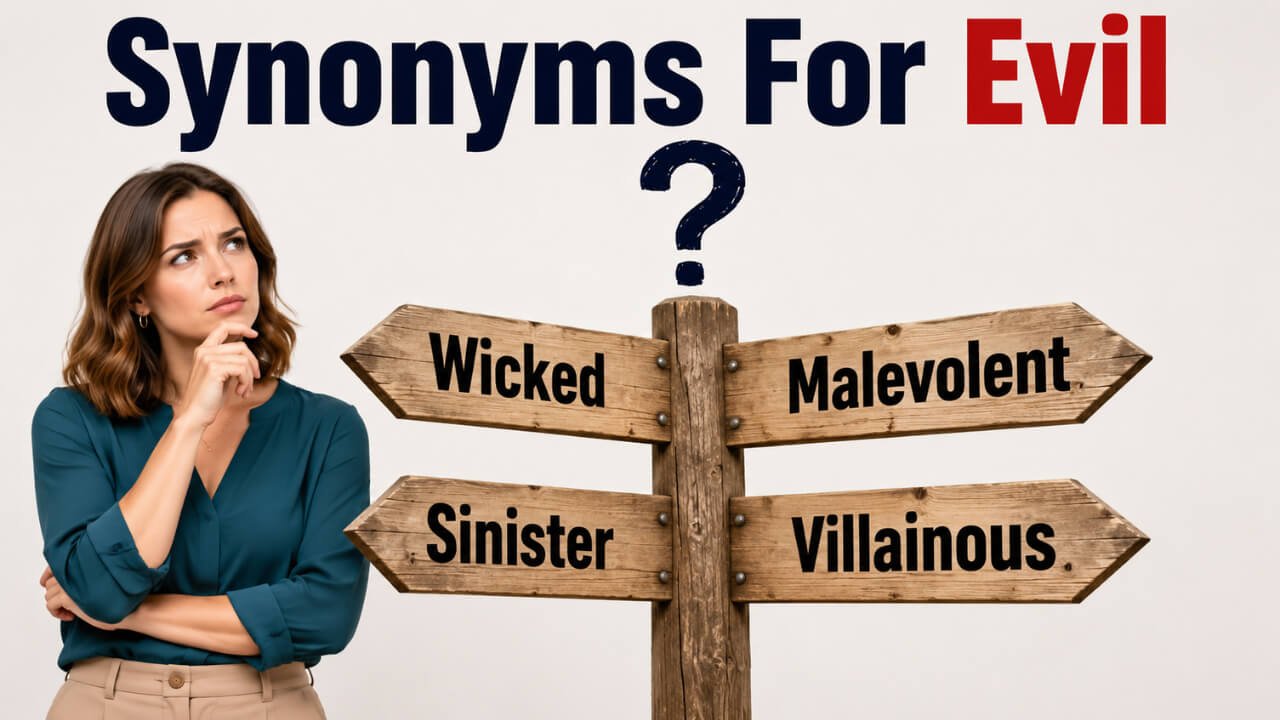
Quick Answer: The best synonyms for evil include wicked, immoral, sinful, cruel, vile, corrupt, malicious, malevolent, depraved, and nefarious. Use wicked for general moral badness, immoral for actions against ethical standards, cruel for hurtful behavior, malicious for harmful intent, malevolent for deep ill will, vile for something disgusting or morally shocking, and nefarious for serious wrongdoing, especially in formal writing.
Pronunciation and Word Details
Word: Evil.
Pronunciation: ˈiːvəl.
Part of Speech: Adjective and noun.
Meaning: Evil means morally bad, harmful, cruel, or connected with serious wrongdoing.
US Pronunciation:
UK Pronunciation:
What Does “Evil” Mean?
Evil means deeply morally wrong, harmful, cruel, or wicked.
As an adjective, evil describes a person, action, idea, plan, force, or behavior that causes harm or shows serious moral badness. For example, an evil act is not just unpleasant. It is seen as cruel, destructive, or morally unacceptable.
As a noun, evil refers to the presence of wickedness, harm, or moral corruption. For example, people may talk about fighting evil, recognizing evil, or choosing good over evil.
The word can work in many sentence contexts. It can describe intent, behavior, character, systems, plans, actions, or effects.
Meaning, Tone, and Context of “Evil”
Evil is a strong and serious word. Its tone is usually moral, emotional, intense, and sometimes dramatic.
In everyday speech, evil can describe something extremely cruel or harmful. In formal writing, it may refer to moral corruption, injustice, violence, abuse, or destructive behavior. In literature and storytelling, evil often describes villains, dark forces, or characters who intentionally cause suffering.
The word is not neutral. It carries judgment. Calling something evil means it is not only wrong, but deeply wrong in a moral sense.
When and How to Use “Evil”
For Moral Wrongdoing: Use evil when something is deeply wrong and harmful.
Example: The villagers feared the evil ruler who punished innocent people.
For Harmful Intent: Use evil when someone plans to hurt others on purpose.
Example: His evil plan was designed to ruin many lives.
For Cruel Behavior: Use evil when an action shows extreme cruelty.
Example: The evil treatment of the prisoners shocked everyone.
For Storytelling: Use evil to describe villains, dark forces, or moral conflict.
Example: The hero had to face an evil power that threatened the kingdom.
For Serious Judgment: Use evil when a softer word like bad, unfair, or wrong is not strong enough.
Example: Exploiting helpless people for profit is an evil act.
Best Synonyms for Evil
Synonym: Wicked.
Meaning: Morally bad or intentionally harmful.
Example: The wicked leader cared only about power.
Synonym: Immoral.
Meaning: Against accepted moral principles.
Example: It was immoral to deceive people for personal gain.
Synonym: Sinful.
Meaning: Morally wrong, often in a religious or spiritual sense.
Example: He believed the action was sinful and harmful.
Synonym: Cruel.
Meaning: Deliberately causing pain or suffering.
Example: Her cruel words left a lasting wound.
Synonym: Vile.
Meaning: Extremely unpleasant, disgusting, or morally terrible.
Example: The vile crime angered the whole community.
Synonym: Corrupt.
Meaning: Dishonest, morally damaged, or influenced by wrongdoing.
Example: The corrupt official accepted money to break the law.
Synonym: Malicious.
Meaning: Having a desire to harm someone.
Example: The malicious rumor was meant to destroy his reputation.
Synonym: Malevolent.
Meaning: Showing deep ill will or a desire to cause harm.
Example: A malevolent smile crossed his face.
Synonym: Depraved.
Meaning: Morally ruined or extremely corrupt.
Example: The depraved act showed no respect for human life.
Synonym: Nefarious.
Meaning: Extremely wicked or criminal.
Example: The group was involved in a nefarious scheme.
50 Synonyms for Evil with Short Meanings
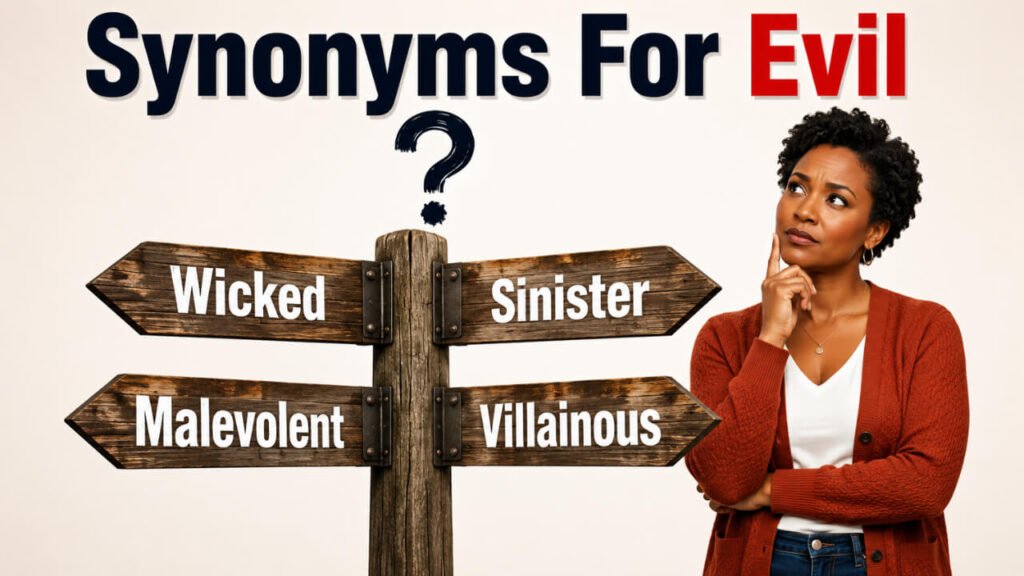
- Wicked: Morally bad or harmful.
- Immoral: Against moral principles.
- Sinful: Wrong in a religious or moral sense.
- Cruel: Intentionally causing pain.
- Vile: Extremely bad or disgusting.
- Corrupt: Dishonest or morally damaged.
- Malicious: Intended to harm.
- Malevolent: Filled with ill will.
- Depraved: Morally ruined or corrupt.
- Nefarious: Extremely wicked or criminal.
- Sinister: Suggesting danger or harm.
- Diabolical: Terribly wicked or devil like.
- Demonic: Extremely evil or monstrous.
- Heinous: Shockingly wicked or cruel.
- Atrocious: Extremely bad or cruel.
- Monstrous: Shockingly cruel or inhuman.
- Barbaric: Brutal, savage, or uncivilized.
- Brutal: Violent, harsh, or cruel.
- Savage: Fierce, violent, or merciless.
- Ruthless: Showing no pity.
- Heartless: Lacking kindness or compassion.
- Merciless: Having no mercy.
- Inhuman: Lacking normal human kindness.
- Abominable: Deeply hateful or disgusting.
- Detestable: Deserving strong dislike.
- Despicable: Morally low and shameful.
- Loathsome: Causing disgust or hatred.
- Repugnant: Strongly offensive or unacceptable.
- Foul: Morally dirty or disgusting.
- Base: Morally low or dishonorable.
- Degenerate: Morally declined or corrupt.
- Perverse: Deliberately wrong or corrupt.
- Twisted: Morally distorted or unhealthy.
- Dark: Connected with danger, harm, or wickedness.
- Villainous: Like a villain in behavior.
- Criminal: Connected with illegal wrongdoing.
- Unethical: Against ethical standards.
- Dishonest: Lacking truth or fairness.
- Treacherous: Disloyal and dangerous.
- Venomous: Full of hatred or spite.
- Spiteful: Wanting to hurt or upset others.
- Hateful: Filled with hate.
- Hostile: Unfriendly and harmful.
- Malignant: Harmful, dangerous, or destructive.
- Pernicious: Causing serious hidden harm.
- Destructive: Causing damage or ruin.
- Harmful: Causing injury or damage.
- Baneful: Harmful or ruinous.
- Infamous: Known for terrible wrongdoing.
- Wrongful: Unjust, illegal, or morally wrong.
Read Also:
Synonyms for Benefit

Synonyms for Evil by Context
When Evil Means Morally Wrong
Use these synonyms when evil describes something against moral values or ethical standards.
Synonyms: Immoral, unethical, sinful, wrongful, corrupt.
Example: It was an immoral decision that harmed innocent people.
Example: The corrupt system protected powerful wrongdoers.
When Evil Means Cruel or Harmful
Use these words when the focus is pain, suffering, violence, or lack of mercy.
Synonyms: Cruel, brutal, savage, merciless, heartless.
Example: The cruel punishment was far too severe.
Example: His heartless response made the situation worse.
When Evil Means Filled With Bad Intent
Use these synonyms when someone wants to cause harm on purpose.
Synonyms: Malicious, malevolent, spiteful, hateful, hostile.
Example: The malicious message was written to hurt her.
Example: His malevolent attitude made everyone uncomfortable.
When Evil Means Extremely Wicked
Use these stronger synonyms for serious crime, shocking cruelty, or deep corruption.
Synonyms: Nefarious, heinous, depraved, vile, monstrous.
Example: The heinous act shocked the entire town.
Example: Their nefarious plan involved fraud and violence.
When Evil Means Dark or Threatening
Use these options when the tone is mysterious, dangerous, or literary.
Synonyms: Sinister, dark, diabolical, demonic, villainous.
Example: A sinister silence filled the room.
Example: The villainous character betrayed everyone.
Another Word for Evil
Another word for evil is wicked. It is the best general replacement because it can describe people, actions, plans, behavior, and intentions. However, the best alternative depends on context. Use immoral for ethics, cruel for suffering, malicious for harmful intent, and nefarious for serious wrongdoing.
Original: The evil ruler destroyed the village.
Better Option: The wicked ruler destroyed the village.
Original: His evil behavior hurt many people.
Better Option: His cruel behavior hurt many people.
Original: The evil plan was discovered.
Better Option: The nefarious plan was discovered.
Original: Her evil comment was meant to wound him.
Better Option: Her malicious comment was meant to wound him.
When Not to Use “Evil”
Do not use evil when the situation is only mildly bad, annoying, unfair, or incorrect. The word can sound too strong if the action is not deeply harmful or morally serious.
Avoid using evil repeatedly in the same paragraph. Strong writing often needs more exact synonyms, such as cruel, immoral, corrupt, malicious, or vile.
Weak: The evil delay made us late.
Better: The frustrating delay made us late.
Weak: She made an evil mistake on the form.
Better: She made a serious mistake on the form.
Weak: The evil answer was not correct.
Better: The incorrect answer was not correct.
Weak: He gave me an evil look during the meeting.
Better: He gave me a hostile look during the meeting.
Weak: The company made an evil pricing choice.
Better: The company made an unethical pricing choice.
Words Commonly Confused With Evil
Evil vs Wicked: Evil is stronger and more serious. Wicked can mean morally bad, but it can also sound less severe in some casual contexts.
Evil vs Immoral: Evil means deeply harmful or wicked. Immoral means against moral rules or ethical standards.
Evil vs Cruel: Evil focuses on moral badness. Cruel focuses on causing pain or suffering.
Evil vs Malicious: Evil is broad. Malicious means someone has a clear desire to harm another person.
Evil vs Sinister: Evil means morally bad. Sinister means threatening, dangerous, or suggesting something bad may happen.
Evil vs Corrupt: Evil can describe any deep wrongdoing. Corrupt usually describes dishonesty, bribery, abuse of power, or moral decay.
Evil vs Nefarious: Evil is common and broad. Nefarious is more formal and often used for criminal or secret wrongdoing.
Which Synonym Should You Choose?
Choose wicked when you need a strong general synonym for evil.
Choose immoral when writing about ethics, values, duty, or right and wrong.
Choose cruel when the main idea is causing pain, fear, or suffering.
Choose malicious when someone intends to hurt another person.
Choose malevolent when describing deep ill will, especially in serious or literary writing.
Choose vile when something is morally disgusting or deeply offensive.
Choose corrupt when writing about dishonesty, power abuse, bribery, or moral damage.
Choose nefarious when writing about serious, secret, or criminal wrongdoing.
Choose sinister when describing something threatening, suspicious, or dark.
Choose heinous when the action is shocking, violent, or extremely wicked.
Real Life Examples of “Evil” in Sentences
Original: The evil man tricked the villagers.
Better Option: The wicked man tricked the villagers.
Original: Her evil words caused deep pain.
Better Option: Her cruel words caused deep pain.
Original: The evil plan was carefully hidden.
Better Option: The nefarious plan was carefully hidden.
Original: The evil decision ignored basic human dignity.
Better Option: The immoral decision ignored basic human dignity.
Original: His evil smile frightened the child.
Better Option: His sinister smile frightened the child.
Original: The evil officer abused his authority.
Better Option: The corrupt officer abused his authority.
Original: They spread an evil rumor about her.
Better Option: They spread a malicious rumor about her.
Original: The evil crime shocked the city.
Better Option: The heinous crime shocked the city.
Original: The story shows how evil can destroy trust.
Better Option: The story shows how corruption can destroy trust.
Original: He had an evil desire to make others suffer.
Better Option: He had a malevolent desire to make others suffer.
Synonym Groups and Usage Differences
Moral Wrongdoing Group
This group includes words that focus on right, wrong, values, and ethical judgment.
Synonyms: Immoral, unethical, sinful, wrongful, corrupt.
Example: The unethical decision damaged public trust.
Cruelty Group
This group fits actions that hurt others physically, emotionally, or socially.
Synonyms: Cruel, brutal, merciless, heartless, inhuman.
Example: The merciless attack left people afraid.
Harmful Intent Group
This group describes a person or action meant to cause damage.
Synonyms: Malicious, malevolent, spiteful, hateful, venomous.
Example: His spiteful words were meant to embarrass her.
Extreme Wickedness Group
This group works for shocking acts, serious crimes, and deep moral corruption.
Synonyms: Heinous, vile, depraved, monstrous, nefarious.
Example: The depraved crime showed a complete lack of conscience.
Dark Threat Group
This group fits danger, fear, suspicion, and dark literary tone.
Synonyms: Sinister, dark, diabolical, demonic, villainous.
Example: The sinister message warned them to leave.
Antonyms of Evil
Antonyms of evil depend on whether evil means morally bad, cruel, harmful, or corrupt. The opposite may describe goodness, kindness, honesty, innocence, or moral purity.
Good: Morally right or beneficial.
Virtuous: Having strong moral goodness.
Righteous: Morally correct and honorable.
Kind: Caring and gentle toward others.
Benevolent: Wanting to do good.
Compassionate: Showing care for suffering.
Merciful: Willing to forgive or show kindness.
Honest: Truthful and morally fair.
Ethical: Following moral principles.
Innocent: Not guilty or harmful.
Noble: Having honorable character.
Pure: Free from moral corruption.
Comparison: Evil vs Related Words
Evil vs Wicked
Evil is stronger and more serious than wicked. Wicked can describe serious moral wrong, but it may also sound less intense depending on context.
Example With Evil: The evil act destroyed many lives.
Example With Wicked: The wicked act showed no respect for others.
Evil vs Immoral
Evil suggests deep harmfulness or wickedness. Immoral focuses on breaking moral principles or ethical standards.
Example With Evil: The evil leader enjoyed the suffering of others.
Example With Immoral: The immoral decision violated basic fairness.
Evil vs Cruel
Evil describes broad moral badness. Cruel describes behavior that causes pain or suffering.
Example With Evil: The evil plan targeted innocent people.
Example With Cruel: The cruel punishment caused unnecessary suffering.
Evil vs Malicious
Evil can describe a person, act, force, or idea. Malicious specifically means done with the intention to harm.
Example With Evil: His evil behavior harmed the whole family.
Example With Malicious: His malicious lie damaged her reputation.
Evil vs Sinister
Evil means morally bad. Sinister means threatening or suggesting hidden danger.
Example With Evil: The evil ruler punished anyone who disagreed.
Example With Sinister: A sinister voice whispered from the hallway.
Evil vs Corrupt
Evil is a broad moral word. Corrupt usually refers to dishonesty, bribery, abuse of power, or moral decay.
Example With Evil: The evil action caused lasting harm.
Example With Corrupt: The corrupt official sold public favors for money.
Evil vs Nefarious
Evil is common and direct. Nefarious is more formal and often describes secret, criminal, or organized wrongdoing.
Example With Evil: They uncovered an evil plan.
Example With Nefarious: They uncovered a nefarious scheme.
Common Phrases and Expressions With Evil
Evil Act: A deeply wrong or harmful action.
Evil Plan: A harmful plan made with bad intent.
Evil Intent: A desire to hurt, damage, or destroy.
Evil Deed: A morally bad action.
Evil Influence: A harmful effect on someone or something.
Evil Force: A destructive or wicked power.
Evil Nature: A deeply bad character or quality.
Evil Eye: A look believed to bring harm or bad luck.
Pure Evil: Complete and extreme wickedness.
Lesser Evil: The less harmful choice between two bad options.
Common Mistakes to Avoid
Using evil for every negative situation can make writing sound exaggerated. Not every bad, wrong, annoying, or unpleasant thing is evil.
Another mistake is choosing a synonym that does not match the context. Use cruel for suffering, immoral for ethics, corrupt for dishonesty, malicious for harmful intent, and sinister for a threatening mood.
Avoid vague phrasing. Instead of saying “an evil thing,” explain whether the thing was harmful, dishonest, violent, cruel, or unethical.
Also avoid repetition. If evil appears too many times in one paragraph, replace it with a more specific synonym.
Conclusion
The keyword synonyms for evil includes many useful words, but the best choice depends on meaning and tone. Use wicked for a general replacement, immoral for ethics, cruel for suffering, malicious for harmful intent, corrupt for dishonesty, and nefarious for serious wrongdoing. Strong vocabulary makes your writing clearer, more accurate, and more expressive. Instead of repeating evil, choose the synonym that best matches the action, character, feeling, or context.
FAQs About Synonyms for Evil
What is the best synonym for evil?
The best general synonym for evil is wicked. It works for people, actions, plans, and behavior that are morally bad or harmful.
What is a formal synonym for evil?
A formal synonym for evil is nefarious. It is often used for serious, secret, or criminal wrongdoing.
What is a stronger word than evil?
Words like heinous, depraved, monstrous, and vile can sound stronger than evil in certain contexts.
What is another word for an evil person?
Another word for an evil person is villainous person, wicked person, cruel person, or malevolent person, depending on context.
Is malicious the same as evil?
Malicious is not exactly the same as evil. Malicious means someone wants to harm others, while evil is a broader word for deep moral badness.
What is the opposite of evil?
The opposite of evil can be good, virtuous, righteous, kind, benevolent, honest, or ethical, depending on the sentence.
Can evil be used as a noun?
Yes. Evil can be used as a noun when referring to wickedness, harm, or moral corruption. For example, “The story explores the battle between good and evil.”
