
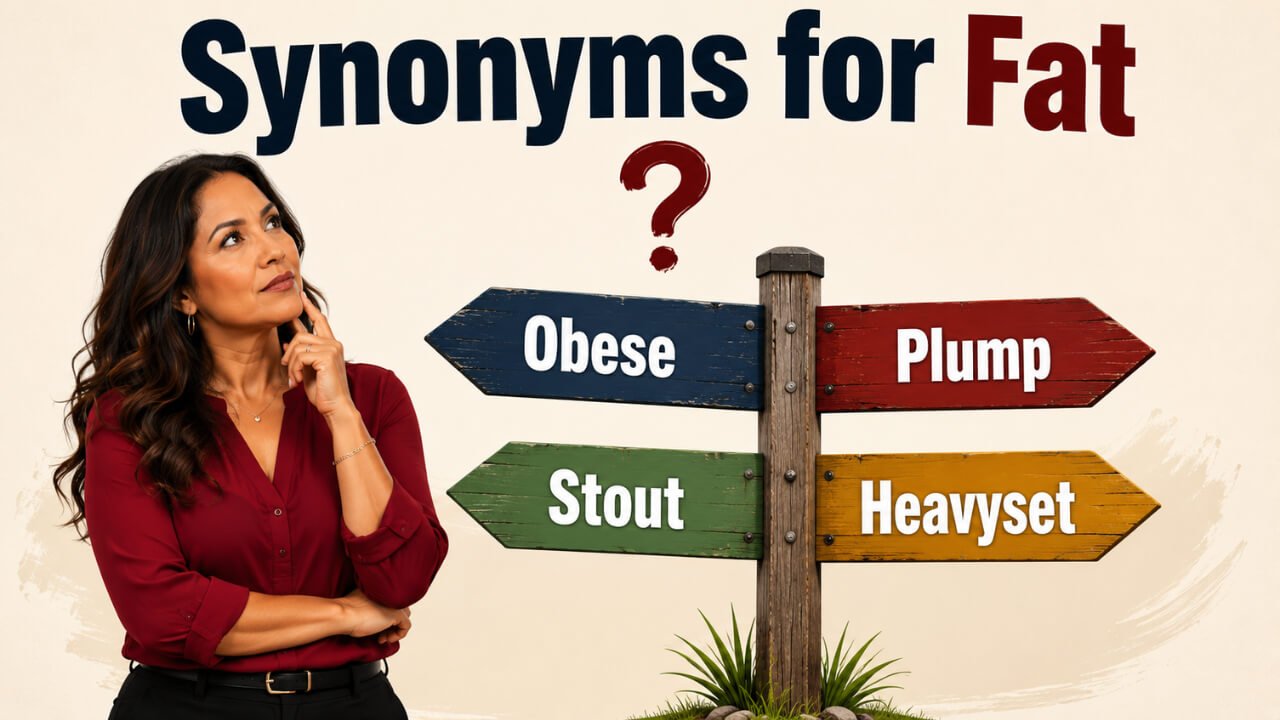
Quick Answer: The best synonyms for fat include overweight, heavyset, large, stout, plump, chubby, bulky, obese, portly, and fatty. Use overweight for a more neutral body description, obese in medical or health related writing, fatty for food or body tissue, plump for a softer tone, and heavyset when describing a person’s build more politely. Some synonyms can sound rude, so context and tone matter.
Pronunciation and Word Details
Word: Fat
Pronunciation: /fæt/
Part of Speech: Adjective and noun.
Meaning: Fat means having extra body weight, containing fat, or being large, thick, or rich in substance.
US Pronunciation:
UK Pronunciation:
What Does “Fat” Mean?
Direct Answer: “Fat” means having a large amount of body fat, containing fat, or being thick, rich, or large in amount.
As an adjective, fat can describe body size, food content, animals, objects, or amounts. For example, a person may be described as fat, a meal may be called fat rich, and a large payment may be called a fat check in casual speech.
As a noun, fat refers to an oily natural substance found in bodies and foods. In grammar and vocabulary, the word changes meaning based on context, so choosing the right synonym depends on whether you are describing a person, food, health, body tissue, or size.
Meaning, Tone, and Context of “Fat”
Tone: “Fat” is direct and can sound rude or insensitive when used for people.
Context: It is common in everyday speech, health discussions, food writing, biology, and informal descriptions.
Formality: The word is neutral in scientific or food related contexts, but informal and sometimes impolite in personal descriptions.
Emotional Effect: When used for a person, it may feel judgmental, insulting, or overly blunt.
Best Use: Use fat when talking about body tissue, nutrition, cooking, or objective description. Use softer alternatives such as overweight, heavyset, or larger bodied when describing people respectfully.
When and How to Use “Fat”
For Body Description: Use the word carefully because it can sound personal or hurtful.
Example: The article discussed how fat distribution can affect health.
For Nutrition: Use fat when talking about nutrients, calories, oils, and food content.
Example: Nuts contain healthy fat and protein.
For Body Tissue: Use fat in biological or medical contexts when referring to tissue.
Example: The body stores extra energy as fat.
For Food Texture: Use fat when describing richness, oiliness, or creaminess.
Example: The sauce has enough fat to make it smooth.
For Informal Size: Use fat casually to describe something large or generous.
Example: He received a fat bonus after the project.
Best Synonyms for Fat
Synonym: Overweight.
Meaning: Above a normal or expected body weight.
Example: The report used overweight instead of fat for a more neutral tone.
Synonym: Heavyset.
Meaning: Having a broad or solid body build.
Example: The character was described as heavyset and strong.
Synonym: Large.
Meaning: Big in body size, shape, or amount.
Example: She chose the word large because it sounded more respectful.
Synonym: Stout.
Meaning: Broad, solid, and somewhat heavy.
Example: The old man had a stout frame and a firm walk.
Synonym: Plump.
Meaning: Slightly fat in a soft or rounded way.
Example: The baby had plump cheeks and bright eyes.
Synonym: Chubby.
Meaning: Softly rounded, usually in a mild or affectionate way.
Example: The child had a chubby face and a cheerful smile.
Synonym: Obese.
Meaning: Having a high level of body fat, usually in medical contexts.
Example: The doctor used obese as a clinical term.
Synonym: Portly.
Meaning: Round and heavy, often used for older adults or formal description.
Example: The portly gentleman wore a dark coat.
Synonym: Fatty.
Meaning: Containing fat or related to fat.
Example: Fatty fish can be rich in nutrients.
Synonym: Bulky.
Meaning: Large, thick, or taking up a lot of space.
Example: The bulky coat made him look wider.
50 Synonyms for Fat with Short Meanings
- Overweight: Above a normal or expected body weight.
- Obese: Having excess body fat in a medical sense.
- Heavy: Having a large body weight.
- Heavyset: Broad, solid, and large in build.
- Large: Big in size or body shape.
- Big: Greater than average in size.
- Broad: Wide in body frame or shape.
- Stout: Solid, broad, and somewhat heavy.
- Stocky: Short, strong, and thick in build.
- Solid: Firm, strong, and large in body shape.
- Bulky: Large and thick in appearance.
- Hefty: Large, heavy, or substantial.
- Plump: Softly and pleasantly rounded.
- Chubby: Rounded and slightly fat.
- Pudgy: Short, soft, and somewhat fat.
- Rounded: Curved, full, or not thin.
- Rotund: Very round in shape.
- Portly: Heavy and round, often in a formal tone.
- Corpulent: Very fat, usually formal and blunt.
- Fleshy: Having soft or full flesh.
- Well built: Having a strong and solid body.
- Full figured: Having a full, rounded body shape.
- Curvy: Having rounded body curves.
- Thick: Broad or full in body shape.
- Ample: Full, large, or generous in size.
- Substantial: Large, solid, or considerable.
- Well padded: Having extra softness or body fat.
- Big bodied: Having a large physical build.
- Large framed: Having a naturally broad body frame.
- Paunchy: Having a noticeable belly.
- Potbellied: Having a round or sticking out belly.
- Big bellied: Having a large stomach area.
- Bulging: Sticking out or swelling outward.
- Bloated: Temporarily swollen or full.
- Fattened: Made heavier or fuller.
- Well fed: Looking full or nourished.
- Husky: Strong, large, and heavy in build.
- Burly: Big, strong, and heavily built.
- Thickset: Solid, broad, and compact in build.
- Sizable: Fairly large in size or amount.
- Fatty: Containing or made of fat.
- Oily: Containing a lot of oil or fat.
- Greasy: Covered with or full of fat or oil.
- Rich: Containing a lot of fat, cream, or flavor.
- Adipose: Related to body fat tissue.
- Lipid rich: Containing many fat based substances.
- High fat: Containing a large amount of fat.
- Creamy: Rich and smooth because of fat content.
- Buttery: Rich, smooth, or full of butter like fat.
- Unlean: Not lean or low in fat.
Read Also:
Synonyms for Critical

Synonyms for Fat by Context
When Fat Means Overweight
Use these words when describing body weight, but choose respectfully.
Synonyms: Overweight, heavyset, large, stout, obese.
Example: The medical form used overweight instead of fat.
When Fat Means Rounded or Full
Use these words for a softer or more visual description.
Synonyms: Plump, chubby, rounded, full figured, curvy.
Example: The child had chubby cheeks and a bright smile.
When Fat Means Large or Thick
Use these words for size, shape, or physical bulk.
Synonyms: Bulky, hefty, broad, thickset, sizable.
Example: The bulky jacket made him look larger.
When Fat Means Containing Fat
Use these words for food, nutrition, or cooking.
Synonyms: Fatty, oily, greasy, rich, high fat.
Example: The dish was rich because it contained butter and cream.
When Fat Means Body Tissue
Use these words for health, biology, and anatomy.
Synonyms: Adipose, fatty, lipid rich.
Example: Adipose tissue stores energy in the body.
When Fat Means Generous or Large in Amount
Use these words in casual or figurative writing.
Synonyms: Big, large, hefty, substantial, sizable.
Example: The team received a substantial reward.
Another Word for Fat
The best single replacement for fat is often overweight when describing body weight in a neutral way. However, the best alternative depends on context. Use fatty for food, adipose for body tissue, heavyset for body build, and substantial for a large amount.
Original: The article described the man as fat.
Better Option: The article described the man as heavyset.
Original: This meat is very fat.
Better Option: This meat is very fatty.
Original: The study measured fat around the organs.
Better Option: The study measured adipose tissue around the organs.
Original: She received a fat payment for her work.
Better Option: She received a substantial payment for her work.
When Not to Use “Fat”
Avoid using fat carelessly when describing people, especially in formal writing, polite conversation, school work, workplace communication, or sensitive topics. It can sound rude, simplistic, or judgmental.
Use a more accurate synonym when you mean medical weight, food content, body tissue, or a large amount.
Weak: He is fat and slow.
Better: He is heavyset and moves carefully.
Weak: The patient is fat.
Better: The patient is overweight.
Weak: The chicken tastes fat.
Better: The chicken tastes greasy.
Weak: The report talks about fat cells.
Better: The report talks about adipose cells.
Words Commonly Confused With Fat
Fat vs Overweight: Fat is more direct and can sound rude. Overweight is more neutral and often used in health or general description.
Fat vs Obese: Obese is a medical term for a higher level of body fat. Fat is broader and less precise.
Fat vs Fatty: Fat can describe a person, substance, or size. Fatty usually means containing fat, especially in food or tissue.
Fat vs Plump: Plump sounds softer and often means pleasantly rounded. Fat is stronger and more direct.
Fat vs Thick: Thick can describe a full body shape, but it may also mean dense, wide, or not thin. It is not always about body fat.
Fat vs Big: Big simply means large. Fat specifically suggests extra flesh or body fat.
Fat vs Adipose: Adipose is a technical word for fat tissue. Fat is the common everyday word.
Which Synonym Should You Choose?
Choose overweight when writing about body weight in a neutral, respectful way.
Choose obese when writing in a medical, health, or clinical context.
Choose heavyset when describing someone’s build without sounding too direct.
Choose plump when the tone is soft, mild, or affectionate.
Choose chubby for a rounded appearance, especially in casual or gentle descriptions.
Choose fatty when writing about food, meat, oils, or tissue content.
Choose adipose when writing about biology, anatomy, or body tissue.
Choose bulky when describing size, thickness, clothing, or objects.
Choose substantial when fat means large in amount, value, or size.
Choose rich when describing food that has cream, butter, oil, or a heavy texture.
Real Life Examples of “Fat” in Sentences
Original: The dog is getting fat.
Better Option: The dog is becoming overweight.
Original: He was a fat man with a loud laugh.
Better Option: He was a heavyset man with a loud laugh.
Original: This soup has too much fat.
Better Option: This soup is too rich.
Original: The doctor measured body fat.
Better Option: The doctor measured body fat percentage.
Original: She avoided fat foods before the test.
Better Option: She avoided fatty foods before the test.
Original: The coat made him look fat.
Better Option: The coat made him look bulky.
Original: The baby has fat cheeks.
Better Option: The baby has plump cheeks.
Original: The company made a fat profit.
Better Option: The company made a substantial profit.
Original: The meat looked fat and oily.
Better Option: The meat looked greasy and oily.
Original: The research focused on fat tissue.
Better Option: The research focused on adipose tissue.
Synonym Groups and Usage Differences
Body Size Group
Words in this group describe a person’s size or build. Some are neutral, while others may sound rude.
Use: Overweight, heavyset, large, stout, obese.
Example: Heavyset is often more respectful than fat in a general description.
Gentle Description Group
These words sound softer and less harsh. They are useful when the tone should feel mild or affectionate.
Use: Plump, chubby, rounded, curvy, full figured.
Example: Plump cheeks sounds gentler than fat cheeks.
Medical Group
These words fit health, research, reports, and clinical writing.
Use: Overweight, obese, adipose, body fat.
Example: Obese is more precise in medical writing than fat.
Food Texture Group
These synonyms describe food that contains oil, butter, cream, or fat.
Use: Fatty, greasy, oily, rich, creamy.
Example: Greasy describes food with too much oil or fat.
Size and Amount Group
These words describe something large, generous, or substantial.
Use: Big, hefty, sizable, substantial, large.
Example: A substantial reward sounds more polished than a fat reward.
Shape and Build Group
These words describe width, thickness, and body form.
Use: Bulky, broad, thickset, stocky, solid.
Example: Stocky suggests a strong, thick build rather than only extra fat.
Antonyms of Fat
Thin: Having little body fat or a narrow shape.
Slim: Attractively thin or narrow.
Lean: Having little fat, often with muscle.
Skinny: Very thin, sometimes too thin.
Slender: Gracefully thin or narrow.
Slight: Small and thin in build.
Underweight: Below a healthy or expected body weight.
Bony: Very thin with visible bones.
Low fat: Containing little fat.
Lean meat: Meat with little fat.
Light: Not heavy in weight or texture.
Spare: Thin, simple, or not full.
Comparison: Fat vs Related Words
Fat vs Overweight
Fat is direct and broad. Overweight is more neutral and often more polite when discussing body weight.
Example With Fat: The article used the word fat in a blunt way.
Example With Overweight: The article used overweight for a more respectful tone.
Fat vs Obese
Fat is a general word. Obese is a medical word that usually describes a higher level of body fat.
Example With Fat: The sentence said the person was fat.
Example With Obese: The report said the patient was obese.
Fat vs Fatty
Fat can be an adjective or a noun. Fatty usually describes something that contains fat.
Example With Fat: The body stores fat for energy.
Example With Fatty: Fatty fish contains natural oils.
Fat vs Plump
Fat can sound negative. Plump sounds softer and often describes a rounded appearance in a gentle way.
Example With Fat: The baby had fat cheeks.
Example With Plump: The baby had plump cheeks.
Fat vs Heavyset
Fat focuses on extra body fat. Heavyset describes a broad or solid body build.
Example With Fat: The writer called the man fat.
Example With Heavyset: The writer called the man heavyset.
Fat vs Rich
Fat describes oil or body tissue. Rich describes food that feels heavy, creamy, or full of flavor.
Example With Fat: The dessert contains a lot of fat.
Example With Rich: The dessert tastes rich and creamy.
Common Phrases and Expressions With Fat
Body Fat: Fat stored in the body.
Fat Tissue: Tissue made mostly of fat cells.
Fat Cells: Cells that store fat in the body.
Fat Content: The amount of fat in food.
Low Fat: Containing little fat.
High Fat: Containing a large amount of fat.
Fat Free: Containing no fat or almost no fat.
Fat Rich: Containing a lot of fat.
Fat Chance: A casual phrase meaning very little chance.
Fat Profit: A casual phrase meaning a large profit.
Common Mistakes to Avoid
Using Fat Too Bluntly: Avoid using fat for people when a gentler or more accurate word is better. Use overweight, heavyset, or larger bodied when the tone needs respect.
Confusing Fat and Fatty: Fat can be a noun or adjective. Fatty usually means containing fat. Say fatty food, not fat food, in most natural sentences.
Using Obese Casually: Obese is a medical term. Do not use it as a casual insult or loose description.
Repeating the Same Word: If a paragraph uses fat too often, replace some uses with body fat, fatty, rich, heavyset, or overweight.
Choosing the Wrong Context: Use adipose for biology, fatty for food, overweight for body weight, and substantial for large amounts.
Making the Sentence Sound Insensitive: Word choice matters when describing appearance. A technically correct synonym can still sound rude if the context is personal.
Using Big as an Exact Synonym Every Time: Big means large, but it does not always mean fat. A big person may be tall, muscular, broad, or heavyset.
Conclusion
Learning synonyms for fat helps you choose words that match meaning, tone, and context. Use overweight or heavyset for respectful body descriptions, obese for medical writing, fatty for food, adipose for biology, and substantial when fat means large in amount. Because fat can sound blunt or hurtful when used for people, always consider whether a softer, clearer, or more precise word would serve the sentence better.
FAQs About Synonyms for Fat
What is the best synonym for fat?
The best synonym for fat depends on context. Use overweight for body weight, fatty for food, adipose for tissue, and substantial for a large amount.
What is a polite word for fat?
A polite word for fat is overweight or heavyset. In some contexts, larger bodied or full figured may also sound more respectful.
Is obese the same as fat?
Obese is related to fat, but it is more medical and specific. Fat is a general word, while obese usually refers to a clinical level of excess body fat.
What is another word for fat in food?
Another word for fat in food is fatty. Depending on the meaning, you can also use oily, greasy, rich, creamy, or high fat.
What is a softer word for fat?
Softer words for fat include plump, chubby, rounded, full figured, and curvy. These words should still be used carefully when describing people.
What is the opposite of fat?
The opposite of fat can be thin, slim, lean, slender, skinny, or underweight. For food, the opposite may be low fat or lean.
Can fat be used as a noun?
Yes, fat can be a noun. For example, “The body stores fat for energy.” As a noun, it often refers to body tissue, food content, or an oily substance.
