
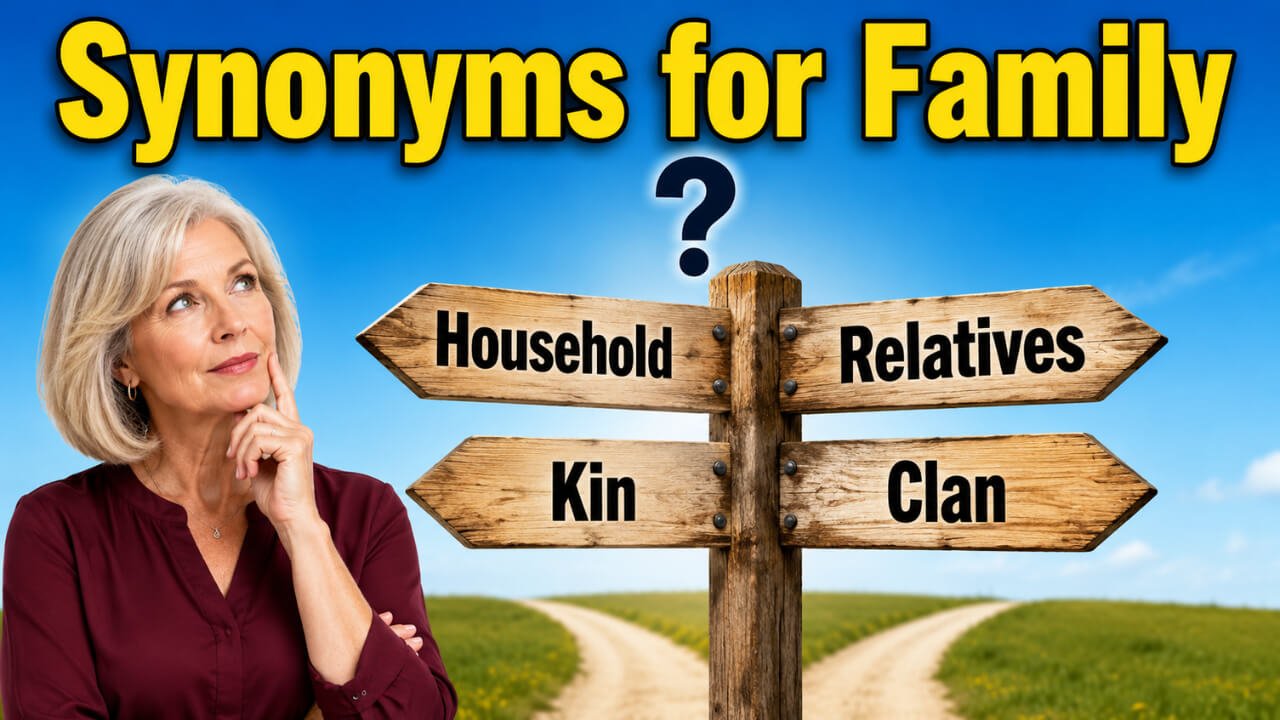
Quick Answer: Synonyms for family include relatives, kin, household, loved ones, kindred, relations, clan, lineage, bloodline, and home. The best synonym depends on context. Use relatives for people connected by blood or marriage, household for people living together, kin for a warm or traditional tone, loved ones for emotional writing, and lineage or bloodline when discussing ancestry, heritage, or descent.
Pronunciation and Word Details
Word: Family.
Pronunciation: /ˈfæm.əl.i/ or /ˈfæm.li/.
Part of Speech: Noun and adjective.
Meaning: Family means a group of people connected by birth, marriage, adoption, shared home, ancestry, or close emotional bonds.
US Pronunciation:
UK Pronunciation:
What Does “Family” Mean?
Family means people who are connected by birth, marriage, adoption, ancestry, or deep personal belonging. As a noun, it usually refers to relatives, parents, children, siblings, a household, or a group of loved ones.
Family can also work as an adjective. For example, a family business means a business owned or managed by relatives. A family meal means a meal shared with relatives or people who feel like home.
The word can be emotional, personal, social, legal, cultural, and sometimes technical. It may describe close relationships, family background, family history, or even a group of related things in grammar, science, or classification.
Meaning, Tone, and Context of “Family”
Family is usually a warm, neutral, and emotionally meaningful word. It can sound personal in daily speech, respectful in formal writing, and deeply emotional in messages about care, support, love, and belonging.
In casual conversation, family often means the people closest to you. In formal writing, it may refer to legal relatives, household members, or family structure. In academic or historical writing, family can connect to ancestry, lineage, kinship, heritage, and social bonds.
Family is also common in emotional writing because it suggests trust, protection, loyalty, care, memory, tradition, and shared life.
When and How to Use “Family”
For Relatives: Use family when talking about people connected by birth, marriage, or adoption.
Example: Her family gathered for dinner on Sunday.
For Household Members: Use family when referring to people who live together or share daily life.
Example: Their family moved into a new home last month.
For Emotional Belonging: Use family when describing people who feel close, loyal, and supportive.
Example: My closest friends feel like family to me.
For Ancestry: Use family when discussing roots, background, or previous generations.
Example: His family has lived in the same village for many years.
For Shared Identity: Use family when describing a group connected by values, history, or common purpose.
Example: The small team became a family through years of trust.
For Classification: Use family when describing a group of related words, ideas, animals, plants, or objects.
Example: These words belong to the same family of meanings.
Best Synonyms for Family
Relatives: People connected by birth, marriage, or adoption.
Example: Many relatives came to celebrate the special day.
Kin: Family members or relatives, often with a warm or traditional tone.
Example: She stayed close to her kin throughout her life.
Household: People who live together in the same home.
Example: The entire household helped prepare the meal.
Loved Ones: People who are deeply cared for, often family or very close friends.
Example: He spent the holiday with his loved ones.
Kindred: People connected by family ties or shared nature.
Example: She felt surrounded by kindred at the reunion.
Relations: Family members or relatives.
Example: Several relations traveled from far away to attend the wedding.
Clan: A large family group connected by ancestry, tradition, or shared identity.
Example: The clan gathered to honor an old family custom.
Lineage: A line of descent from ancestors.
Example: Her lineage includes generations of skilled artists.
Bloodline: A family line connected by birth and ancestry.
Example: The story follows a royal bloodline across many generations.
Home: A warm alternative when family means comfort, belonging, and emotional safety.
Example: Wherever they were together, it felt like home.
50 Synonyms for Family with Short Meanings
- Relatives: People connected by birth, marriage, or adoption.
- Kin: Family members or close relatives.
- Kindred: People connected by family ties or shared nature.
- Relations: Relatives or family connections.
- Loved Ones: People deeply cared for.
- Household: People living together in one home.
- Home: Family as a place of belonging and care.
- Parents: Mother, father, or guardians in a family.
- Children: Sons, daughters, or young family members.
- Siblings: Brothers and sisters.
- Immediate Family: Closest family members, such as parents, children, and siblings.
- Extended Family: Relatives beyond the closest family group.
- Nuclear Family: Parents and their children.
- Blended Family: Family formed through remarriage or combined households.
- Chosen Family: Close people treated as family by love and loyalty.
- Foster Family: Family that cares for a child temporarily or long term.
- Adoptive Family: Family formed through adoption.
- Ancestors: Family members from earlier generations.
- Descendants: People who come from a family line.
- Forebears: Ancestors or previous family generations.
- Lineage: Direct family descent.
- Bloodline: Family line through birth.
- Ancestry: Family origin and background.
- Family Tree: Record of family relationships across generations.
- Clan: Large family group with shared ancestry.
- Tribe: Group connected by ancestry, culture, or strong belonging.
- House: Noble, historic, or traditional family line.
- Dynasty: Powerful family line across generations.
- People: Informal word for one’s family or close group.
- Folks: Casual word for parents, relatives, or family.
- Next of Kin: Closest legal family member.
- Nearest and Dearest: Closest and most loved people.
- Support Circle: People who provide care, help, and emotional support.
- Inner Circle: Closest trusted people.
- Close Circle: Small group of loved and trusted people.
- Relatives by Marriage: Family connected through marriage.
- In Laws: Family members gained through marriage.
- Cousins: Children of a parent’s siblings or extended relatives.
- Elders: Older respected family members.
- Family Members: People who belong to a family.
- Relations by Blood: Relatives connected through birth.
- Genetic Line: Family connection through inherited traits.
- Heritage: Family background, customs, and identity.
- Roots: Family origin and ancestral background.
- Birth Family: Family connected by birth.
- Maternal Side: Family connected through the mother.
- Paternal Side: Family connected through the father.
- Domestic Circle: People connected through home life.
- Family Unit: Group of people forming one family structure.
- Kinsfolk: Relatives or family members.
Read Also:
Synonyms for Common

Synonyms for Family by Context
When Family Means Relatives
Use these synonyms when family means people connected by birth, marriage, adoption, or legal relationship.
Synonyms: Relatives, kin, relations, kindred, family members, next of kin.
Example: All her relatives came together for the celebration.
Example: He asked his kin for advice before making the decision.
When Family Means Household
Use these alternatives when family means people living together or sharing daily home life.
Synonyms: Household, home, family unit, domestic circle, close circle.
Example: The household agreed to eat dinner together every evening.
Example: Their family unit became stronger through patience and care.
When Family Means Loved Ones
Use these choices when the tone is emotional, caring, or personal.
Synonyms: Loved ones, nearest and dearest, inner circle, support circle, chosen family.
Example: She wanted to spend the evening with her loved ones.
Example: His chosen family helped him through difficult times.
When Family Means Ancestry
Use these words when writing about roots, background, history, or generations.
Synonyms: Lineage, bloodline, ancestry, heritage, roots, forebears, descendants.
Example: Her lineage tells the story of courage and tradition.
Example: They studied their ancestry to understand their family history.
When Family Means Group or Category
Use these alternatives when family means a related group of words, ideas, species, objects, or concepts.
Synonyms: Group, class, category, set, type, branch.
Example: These terms belong to the same word group.
Example: That idea is part of a larger category of related concepts.
Another Word for Family
Another word for family is relatives when you mean people connected by birth, marriage, or adoption. However, the best replacement depends on the sentence. Use household for people living together, kin for a warmer or more traditional tone, loved ones for emotional writing, and lineage for ancestry.
Original: My family is coming for dinner tonight.
Better Option: My relatives are coming for dinner tonight.
Original: Her family lives in the same house.
Better Option: Her household lives in the same house.
Original: He cares deeply about his family.
Better Option: He cares deeply about his loved ones.
Original: The family has a long history in this town.
Better Option: The lineage has a long history in this town.
When Not to Use “Family”
Do not use family when a more specific word would make the sentence clearer. Family can sound too broad if you only mean parents, children, siblings, relatives, or household members.
Avoid repeating family too often in the same paragraph. Use relatives, loved ones, household, kin, or family members to create smoother writing.
Weak: My family met my family at the family event.
Better: My relatives met my parents at the family event.
Weak: His family is in the family business.
Better: His relatives work in the family business.
Weak: She invited her family, friends, and other family.
Better: She invited her relatives, friends, and extended family.
Weak: The family of words has many family meanings.
Better: The word group has many related meanings.
Words Commonly Confused With Family
Family vs Relatives: Family can mean relatives, household, loved ones, or emotional belonging. Relatives usually means people connected by blood, marriage, or adoption.
Family vs Household: Family focuses on relationship. Household focuses on people living in the same home.
Family vs Kin: Kin means relatives and often sounds warmer, older, or more traditional than family.
Family vs Clan: Clan usually means a larger family group connected by ancestry, tradition, or shared identity.
Family vs Lineage: Family refers to people and relationships. Lineage refers to the line of descent from ancestors.
Family vs Bloodline: Family can include adoption, marriage, and chosen bonds. Bloodline focuses on biological descent.
Family vs Community: Family is usually closer and more personal. Community refers to a larger group connected by place, values, or shared life.
Which Synonym Should You Choose?
Choose relatives when writing about people connected by birth, marriage, or adoption.
Choose kin when you want a warm, traditional, or slightly literary word.
Choose household when the meaning is people living together in one home.
Choose loved ones when the sentence is emotional, caring, or personal.
Choose immediate family when you mean parents, children, siblings, or closest relatives.
Choose extended family when you mean cousins, grandparents, aunts, uncles, and other relatives.
Choose lineage when writing about ancestry, descent, history, or generations.
Choose bloodline when biological descent is the main idea.
Choose clan when describing a large family group with shared tradition or identity.
Choose family unit when writing about family structure in a clear or formal way.
Real Life Examples of “Family” in Sentences
Original: My family supports me in every decision.
Better Option: My loved ones support me in every decision.
Original: Her family arrived before noon.
Better Option: Her relatives arrived before noon.
Original: The family lives in a small apartment.
Better Option: The household lives in a small apartment.
Original: He is proud of his family history.
Better Option: He is proud of his ancestry.
Original: Their family has many old traditions.
Better Option: Their lineage has many old traditions.
Original: She treats her closest friends like family.
Better Option: She treats her closest friends like chosen family.
Original: The family gathered around the table.
Better Option: The loved ones gathered around the table.
Original: His family includes many cousins.
Better Option: His extended family includes many cousins.
Original: The family name is respected in the town.
Better Option: The family lineage is respected in the town.
Original: They built a strong family through trust.
Better Option: They built a strong family unit through trust.
Synonym Groups and Usage Differences
Relatives Group
This group refers to people connected through birth, marriage, adoption, or legal family ties.
Synonyms: Relatives, relations, kin, kindred, family members.
Example: Her relatives helped organize the gathering.
Household Group
This group works best when the focus is on shared home life rather than blood relationship.
Synonyms: Household, home, family unit, domestic circle.
Example: The household shares meals every evening.
Emotional Belonging Group
This group is useful when family means love, comfort, loyalty, and care.
Synonyms: Loved ones, nearest and dearest, chosen family, support circle.
Example: He wanted his loved ones beside him during the ceremony.
Ancestry Group
This group works best for family history, roots, and generational identity.
Synonyms: Lineage, ancestry, heritage, roots, bloodline, forebears.
Example: Her ancestry connects her to many old traditions.
Large Family Group
This group suggests a wider family network, often with shared customs or identity.
Synonyms: Clan, tribe, house, dynasty, extended family.
Example: The clan gathered for an annual celebration.
Close Family Group
This group points to the closest family members.
Synonyms: Immediate family, parents, children, siblings, next of kin.
Example: Only immediate family attended the private ceremony.
Antonyms of Family
Family has different opposites depending on meaning. If family means relatives, the opposite may be stranger or unrelated person. If family means belonging, the opposite may be outsider or stranger. If family means closeness, the opposite may be distance or separation.
Stranger: Someone unknown or not personally connected.
Outsider: Someone who does not belong to a close group.
Unrelated Person: Someone with no family connection.
Acquaintance: Someone known but not close like family.
Enemy: Someone opposed rather than supportive.
Individual: One person considered separately from a family group.
Separation: Distance or lack of togetherness.
Disconnection: Lack of relationship, bond, or belonging.
Comparison: Family vs Related Words
Family vs Relatives
Family is broader than relatives. It can include emotional bonds, household members, adopted members, and chosen family. Relatives usually means people connected by blood, marriage, or adoption.
Example With Family: My family gives me strength.
Example With Relatives: My relatives visited from another city.
Family vs Kin
Kin means relatives and often feels warmer, older, or more traditional. Family is more common in everyday speech.
Example With Family: Her family lives nearby.
Example With Kin: Her kin gathered for the ceremony.
Family vs Household
Family focuses on relationship and belonging. Household focuses on people living in the same home.
Example With Family: His family is very supportive.
Example With Household: The household agreed on a weekly routine.
Family vs Clan
Family can be small or large. Clan usually suggests a bigger group connected by ancestry, tradition, or shared identity.
Example With Family: Their family celebrates together every year.
Example With Clan: Their clan follows old customs.
Family vs Lineage
Family refers to people and relationships. Lineage refers to ancestry and descent across generations.
Example With Family: She loves spending time with her family.
Example With Lineage: She researched her lineage for a history project.
Family vs Loved Ones
Family may be biological, legal, or emotional. Loved ones focuses on affection and care, whether or not the people are relatives.
Example With Family: He invited his family to dinner.
Example With Loved Ones: He spent the evening with his loved ones.
Common Phrases and Expressions With Family
Family Member: A person who belongs to a family.
Family Tree: A chart or record showing family relationships.
Immediate Family: Closest family members, such as parents, children, and siblings.
Extended Family: Relatives beyond the closest family members.
Family Values: Beliefs and principles shared within a family.
Family Bond: Emotional connection between family members.
Family Name: A surname or name passed through a family.
Family Tradition: Custom or practice shared across family members.
Family Background: Personal history connected to family origin and upbringing.
Family Gathering: Meeting or event where family members come together.
Common Mistakes to Avoid
Using Family Too Broadly: Do not use family when you only mean parents, siblings, children, or relatives. A more specific word can improve clarity.
Repeating Family Too Often: Repetition can make writing sound dull. Replace some uses with relatives, loved ones, household, kin, or family members.
Confusing Family and Household: Family means relationship. Household means people living together. A person can be family without living in the same household.
Using Bloodline for Every Family Context: Bloodline only works when biological descent matters. It is not suitable for chosen family, adoption, marriage, or emotional belonging.
Using Clan in Simple Sentences: Clan can sound too historical, cultural, or dramatic if you only mean close relatives.
Ignoring Tone: Loved ones sounds warm and emotional. Relatives sounds clear and neutral. Lineage sounds formal or historical.
Choosing Weak Synonyms: Words like group or people may be useful in some contexts, but they are often too general when you need a clear synonym for family.
Conclusion
Synonyms for family help you describe relationships with more accuracy, warmth, and variety. Use relatives for direct family connections, household for people living together, loved ones for emotional meaning, kin for a traditional tone, and lineage or ancestry for family history. The best word depends on whether you mean close relatives, extended relations, home life, heritage, or emotional belonging. Choosing the right synonym makes your writing clearer, more natural, and more meaningful.
FAQs About Synonyms for Family
What is the best synonym for family?
The best synonym for family is relatives when you mean people connected by birth, marriage, or adoption. Use loved ones when the tone is emotional.
What is another word for family in a warm way?
Loved ones is a warm alternative to family. Kin, nearest and dearest, and chosen family can also sound caring and personal.
What is a formal synonym for family?
Relatives, household, family unit, lineage, and next of kin are more formal choices. The best one depends on the sentence.
What is a synonym for family history?
Ancestry, lineage, heritage, roots, and bloodline are good synonyms when family means background or past generations.
What is the difference between family and relatives?
Family is broader and can include emotional belonging, household members, and chosen bonds. Relatives usually means people connected by blood, marriage, or adoption.
Can friends be called family?
Yes, close friends can be called chosen family when they provide love, loyalty, care, and support like relatives.
What is the opposite of family?
Possible opposites include stranger, outsider, unrelated person, acquaintance, separation, and disconnection, depending on the meaning of family
