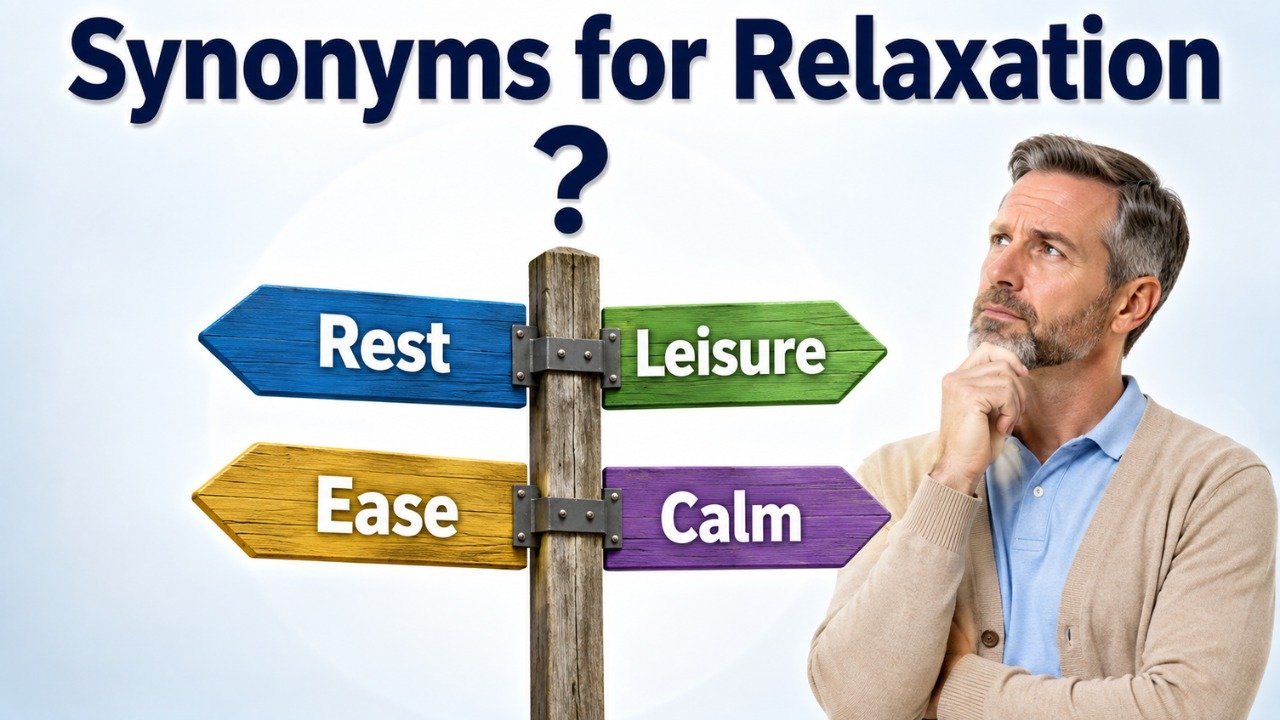
Quick Answer: The best synonyms for relaxation include rest, repose, leisure, calm, tranquility, serenity, unwinding, respite, recreation, and decompression. Use rest for physical recovery, calm or serenity for emotional peace, leisure for free time, recreation for enjoyable activities, respite for a temporary break, and decompression for releasing stress after pressure or work. In formal writing, repose, tranquility, and recuperation may be suitable. In casual conversation, rest, break, downtime, and unwinding usually sound more natural.
Pronunciation and Word Details
Word: Relaxation.
Pronunciation: /ˌriː.lækˈseɪ.ʃən/
Part of Speech: Noun.
Meaning: A state or activity in which the body or mind becomes calm, comfortable, and free from tension.
US Pronunciation:
UK Pronunciation:
What Does “Relaxation” Mean?
Relaxation means becoming physically comfortable, mentally calm, or free from stress and tension. It is a noun formed from the verb relax.
The word can describe a peaceful state of mind, a period of rest, an enjoyable activity, or the release of physical tension. It may also refer to making a rule, restriction, or standard less strict.
Physical Meaning: Relaxation can describe the release of tension from the muscles or body.
Example: Gentle stretching encouraged relaxation in her shoulders.
Mental Meaning: It can describe a calm state without worry or pressure.
Example: Reading provided a sense of relaxation after a demanding day.
Activity Meaning: It can refer to something done for rest or enjoyment.
Example: Gardening is his favorite form of relaxation.
Rules Meaning: It can describe the easing of a rule or restriction.
Example: The relaxation of the dress code allowed more personal choice.
Relaxation therefore works in health, lifestyle, workplace, academic, technical, and everyday contexts.
Meaning, Tone, and Context of “Relaxation”
Relaxation is usually a neutral and positive word. It suggests comfort, calmness, reduced pressure, or freedom from demanding activity.
Neutral Tone: Relaxation can be used in ordinary speech and general writing without sounding too formal or too casual.
Example: The weekend gave everyone time for relaxation.
Positive Tone: The word often creates pleasant associations with peace, comfort, and personal well being.
Example: The quiet garden was designed for relaxation.
Health Context: Relaxation may refer to reducing physical tension, slowing breathing, or calming the mind.
Example: Controlled breathing can support mental relaxation.
Workplace Context: It may describe rest after concentration, deadlines, or demanding tasks.
Example: A short walk offered relaxation between meetings.
Academic Context: The word can describe the easing of standards, conditions, or restrictions.
Example: The relaxation of the admission requirement changed the process.
Technical Context: In science and medicine, relaxation may describe the return of a system, muscle, or material to a less active or less tense state.
In casual conversation, speakers may choose rest, break, downtime, or unwinding instead. In formal writing, repose, recuperation, tranquility, or easing may provide greater precision.
When and How to Use “Relaxation”
Use relaxation when discussing rest, emotional calm, enjoyable free time, physical release, or the easing of restrictions.
For Physical Rest: Use relaxation when the body is recovering from movement, effort, or tension.
Example: The warm bath encouraged complete physical relaxation.
For Mental Calm: Use it when someone becomes less worried, anxious, or mentally active.
Example: Quiet music helped her achieve mental relaxation.
For Free Time: Use relaxation for periods without work or responsibilities.
Example: He reserved Sunday afternoon for relaxation.
For Enjoyable Activities: Use it for hobbies or activities that make someone feel refreshed.
Example: Painting is a source of relaxation for many people.
For Stress Release: Use it when pressure decreases after a demanding situation.
Example: The peaceful evening provided much needed relaxation after the presentation.
For Muscle Release: Use it when muscles become loose rather than tight.
Example: Slow breathing supported the relaxation of the neck muscles.
For Easing Rules: Use it when regulations, requirements, or restrictions become less strict.
Example: The relaxation of the policy gave employees greater flexibility.
For Formal Descriptions: Use relaxation in reports, essays, health discussions, and professional explanations.
Example: The study examined the connection between relaxation and concentration.
Best Synonyms for Relaxation
Rest
Synonym: A period when activity stops so the body or mind can recover.
Example: She needed rest after the long journey.
Repose
Synonym: A peaceful and often formal state of rest.
Example: The quiet room offered a sense of repose.
Leisure
Synonym: Free time available for enjoyment rather than work.
Example: He spends his leisure reading and gardening.
Calm
Synonym: A state without worry, excitement, or disturbance.
Example: The gentle sound of rain brought her calm.
Tranquility
Synonym: A deeply peaceful state without noise or stress.
Example: They enjoyed the tranquility of the countryside.
Unwinding
Synonym: Gradually releasing stress after work or pressure.
Example: An evening walk is her preferred way of unwinding.
Respite
Synonym: A short period of relief from difficulty or effort.
Example: The quiet lunch provided a welcome respite from work.
Recreation
Synonym: Enjoyable activity performed during free time.
Example: Swimming is both exercise and recreation.
Relief
Synonym: The feeling produced when pain, stress, or worry decreases.
Example: Finishing the assignment brought immediate relief.
Decompression
Synonym: The gradual release of mental or emotional pressure.
Example: He needed an hour of decompression after the busy event.
50 Synonyms for Relaxation with Short Meanings
- Rest: Freedom from physical or mental activity.
- Repose: A peaceful state of rest.
- Leisure: Free time without work duties.
- Recreation: Enjoyable activity that refreshes the mind or body.
- Relief: Freedom from pain, worry, or pressure.
- Ease: A state of comfort without difficulty.
- Calm: Freedom from excitement, worry, or disturbance.
- Tranquility: Deep peacefulness and quiet.
- Serenity: A calm and emotionally balanced state.
- Peace: Freedom from tension or disturbance.
- Comfort: A pleasant state of physical or emotional ease.
- Unwinding: The gradual release of stress.
- Respite: A temporary break from difficulty or effort.
- Refreshment: Renewed energy gained through rest.
- Restoration: The return of energy, strength, or balance.
- Recuperation: Recovery of strength after effort or illness.
- Recovery: A return to a normal or healthy condition.
- Downtime: Time when work or activity stops.
- Restfulness: The quality of being peaceful and relaxing.
- Quiet: A state with little noise or disturbance.
- Stillness: Complete absence of movement or activity.
- Composure: Emotional control and calmness.
- Contentment: A peaceful feeling of satisfaction.
- Peacefulness: The quality of being calm and undisturbed.
- Placidity: A calm state without strong emotion or movement.
- Release: Freedom from pressure, tension, or restraint.
- Decompression: Reduction of emotional or mental pressure.
- Easing: A gradual reduction in tension or difficulty.
- Loosening: The process of becoming less tight or restricted.
- Slackening: A reduction in tightness, effort, or intensity.
- Softening: A reduction in severity, firmness, or tension.
- Unbending: Becoming less formal, tense, or restrained.
- Letting Go: Releasing worry, control, or emotional tension.
- Break: A short pause from work or activity.
- Pause: A temporary stop before continuing.
- Recess: An official period of rest or interruption.
- Intermission: A planned pause between parts of an activity.
- Breather: A brief informal period of rest.
- Lull: A temporary period of calm or reduced activity.
- Vacation: An extended period away from normal work.
- Holiday: Time spent away from regular responsibilities.
- Retreat: A quiet period or place used for rest and reflection.
- Diversion: An activity that turns attention away from stress.
- Amusement: Enjoyable entertainment that provides pleasure.
- Enjoyment: The experience of pleasure or satisfaction.
- Pleasure: A feeling of happiness, comfort, or delight.
- Meditation: Focused mental practice used to develop calmness.
- Mindfulness: Calm awareness of the present moment.
- Relief From Stress: Freedom from emotional or mental pressure.
- Freedom From Tension: A state without physical or emotional strain.
Read Also:
Synonyms for Conjure
Synonyms for Relaxation by Context
When Relaxation Means Physical Rest
Rest, recuperation, recovery, restoration, repose, and refreshment describe the recovery of physical energy.
Rest: The most common and direct choice for stopping activity.
Example: The doctor recommended several days of rest.
Recuperation: Best for recovering strength after illness, injury, or demanding effort.
Example: Her recuperation continued at home.
Restoration: Emphasizes the return of strength or balance.
Example: Sleep supported the restoration of his energy.
Repose: A more formal or literary word for peaceful rest.
Example: The shaded bench offered quiet repose.
When Relaxation Means Mental Calm
Calm, serenity, tranquility, peace, composure, peacefulness, and contentment describe emotional stillness.
Calm: A simple word for freedom from worry or excitement.
Example: Deep breathing brought a feeling of calm.
Serenity: Suggests lasting inner peace and emotional balance.
Example: Her voice expressed confidence and serenity.
Tranquility: Emphasizes a peaceful environment or undisturbed state.
Example: The distant hills added to the tranquility of the scene.
Composure: Refers to emotional control, especially during pressure.
Example: He maintained his composure throughout the discussion.
When Relaxation Means a Break
Break, pause, respite, breather, recess, intermission, lull, and downtime describe a temporary stop.
Break: The most natural general word for a short stop.
Example: Let us take a short break before continuing.
Respite: A temporary escape from something tiring or unpleasant.
Example: The cooler weather brought a respite from the heat.
Breather: An informal word for a very short rest.
Example: She took a breather after completing the first task.
Downtime: Time when work, machines, or regular activity stops.
Example: He uses his downtime to read.
When Relaxation Means Enjoyable Free Time
Leisure, recreation, diversion, amusement, enjoyment, pleasure, vacation, and holiday describe pleasant time away from responsibilities.
Leisure: Refers to free time rather than a specific activity.
Example: She enjoys writing during her leisure.
Recreation: Refers to an enjoyable activity that refreshes someone.
Example: Walking and swimming are popular forms of recreation.
Diversion: An activity that temporarily redirects attention from pressure.
Example: The puzzle provided a pleasant diversion.
Enjoyment: Emphasizes the pleasure gained from an experience.
Example: Music gives him both relaxation and enjoyment.
When Relaxation Means Easing or Loosening
Easing, loosening, slackening, softening, reduction, and release can replace relaxation when rules, muscles, or restrictions become less severe.
Easing: Best for a gradual reduction in pressure or restriction.
Example: The easing of the requirements simplified the application.
Loosening: Best when something becomes less tight or controlled.
Example: The loosening of the rope reduced the pressure.
Softening: Best when a rule, attitude, or statement becomes less severe.
Example: The softening of her position encouraged discussion.
Release: Best when tension or restraint disappears.
Example: Stretching allowed the release of muscle tension.
Another Word for Relaxation
The best single replacement for relaxation is usually rest. It is simple, familiar, and suitable when someone stops working or allows the body and mind to recover.
However, the strongest alternative depends on the intended meaning. Calm is better for emotional peace, leisure is better for free time, recreation is better for enjoyable activities, and respite is better for temporary relief.
Original: I need some relaxation after work.
Better Option: I need some rest after work.
Original: The quiet room created relaxation.
Better Option: The quiet room created a sense of tranquility.
Original: She enjoys relaxation on the weekend.
Better Option: She enjoys leisure on the weekend.
Original: The lunch period gave us relaxation from the busy schedule.
Better Option: The lunch period gave us a respite from the busy schedule.
When Not to Use “Relaxation”
Do not use relaxation when a more precise word would explain the type of rest, relief, or calm more clearly.
When Referring to Sleep
Relaxation does not always mean sleep. Use sleep or rest when actual physical recovery is intended.
Weak: He needed relaxation for eight hours.
Better: He needed eight hours of sleep.
When Describing Recovery From Illness
Use recuperation or recovery when discussing the return of strength after illness or injury.
Weak: Her relaxation after surgery lasted several weeks.
Better: Her recuperation after surgery lasted several weeks.
When Referring to Free Time
Use leisure when the main idea is time without work rather than calmness.
Weak: He has more relaxation during the summer.
Better: He has more leisure during the summer.
When Describing an Enjoyable Activity
Use recreation when referring to an active hobby or pastime.
Weak: Tennis is his favorite relaxation.
Better: Tennis is his favorite form of recreation.
When Referring to Temporary Relief
Use respite when the break is short and comes during a difficult experience.
Weak: The rain provided relaxation from the heat.
Better: The rain provided a respite from the heat.
When Describing Less Strict Rules
Use easing, loosening, or reduction when clarity is important.
Weak: The relaxation of rules happened gradually.
Better: The easing of the rules happened gradually.
Words Commonly Confused With Relaxation
Relaxation vs Rest: Relaxation is the broader state of becoming calm or comfortable. Rest usually means stopping activity to recover energy.
Relaxation vs Leisure: Relaxation describes calmness or reduced tension. Leisure describes free time that may be used for relaxing or for active hobbies.
Relaxation vs Recreation: Relaxation may be passive, while recreation normally involves an enjoyable activity.
Relaxation vs Relief: Relaxation is a general state of calm. Relief is the feeling experienced when a specific pain, worry, or problem decreases.
Relaxation vs Sleep: Relaxation may occur while someone is awake. Sleep is a natural state of unconscious rest.
Relaxation vs Meditation: Relaxation is a result or condition. Meditation is a specific practice that may produce relaxation.
Relaxation vs Calm: Relaxation can involve the body, mind, or schedule. Calm mainly describes freedom from emotional disturbance or excitement.
Relaxation vs Recuperation: Relaxation reduces tension. Recuperation involves regaining strength after illness, injury, or exhaustion.
Which Synonym Should You Choose?
Choose rest when describing physical or mental recovery after work, travel, or effort.
Choose repose when you need a formal or literary word for peaceful rest.
Choose leisure when discussing free time without work or responsibilities.
Choose recreation when describing an enjoyable hobby, sport, or activity.
Choose calm when referring to freedom from worry, excitement, or emotional disturbance.
Choose serenity when describing deep inner peace and emotional balance.
Choose tranquility when describing a peaceful place, atmosphere, or undisturbed condition.
Choose respite when referring to a brief escape from work, pain, difficulty, or pressure.
Choose relief when a specific worry, discomfort, or stressful condition has ended.
Choose recuperation in health related writing about recovering strength.
Choose downtime in informal workplace or conversational writing about inactive periods.
Choose decompression when describing the release of pressure after an intense experience.
Choose easing when discussing rules, restrictions, pain, or difficulty becoming less severe.
Choose break or breather in casual speech when someone needs a short pause.
Choose mindfulness or meditation when referring to practices intended to calm attention and reduce stress.
Real Life Examples of “Relaxation” in Sentences
Original: She listened to quiet music for relaxation.
Better Option: She listened to quiet music for calm.
Original: The holiday gave him time for relaxation.
Better Option: The holiday gave him time for rest.
Original: Walking is her favorite form of relaxation.
Better Option: Walking is her favorite form of recreation.
Original: The garden created an atmosphere of relaxation.
Better Option: The garden created an atmosphere of tranquility.
Original: We enjoyed an hour of relaxation after lunch.
Better Option: We enjoyed an hour of leisure after lunch.
Original: The short pause offered relaxation from the busy schedule.
Better Option: The short pause offered respite from the busy schedule.
Original: He needed relaxation after completing the difficult project.
Better Option: He needed time to decompress after completing the difficult project.
Original: The exercises encouraged relaxation of the muscles.
Better Option: The exercises encouraged the release of muscle tension.
Original: The relaxation of the rules increased flexibility.
Better Option: The easing of the rules increased flexibility.
Original: Reading before bed gives her relaxation.
Better Option: Reading before bed gives her peace of mind.
Synonym Groups and Usage Differences
Rest and Recovery Group
Rest, recuperation, recovery, restoration, refreshment, and repose relate to regaining physical or mental energy.
Rest is the most general choice. Recuperation and recovery are more appropriate after illness or exhaustion. Restoration emphasizes returning to a healthy or balanced condition.
Example: A full night of rest supported his recovery.
Mental Peace Group
Calm, serenity, tranquility, peace, peacefulness, placidity, and composure relate to emotional control and freedom from disturbance.
Calm is simple and flexible. Serenity suggests deep inner peace. Tranquility often describes a peaceful environment. Composure suggests control during a difficult moment.
Example: She maintained her composure and eventually regained her calm.
Free Time Group
Leisure, downtime, vacation, holiday, enjoyment, and pleasure describe time away from regular responsibilities.
Leisure is the most precise term for unoccupied time. Downtime is more informal. Vacation and holiday refer to longer periods away from work.
Example: He uses his leisure for reading and creative activities.
Short Break Group
Break, pause, respite, breather, recess, intermission, and lull refer to temporary interruptions.
Break is the broadest choice. Respite suggests relief from difficulty. Breather is casual. Recess and intermission often refer to planned pauses.
Example: The short break provided a welcome respite.
Stress Release Group
Unwinding, decompression, release, letting go, meditation, and mindfulness relate to reducing mental or emotional pressure.
Unwinding is common in casual conversation. Decompression is useful after an intense experience. Meditation and mindfulness describe deliberate calming practices.
Example: Evening meditation helped with decompression after work.
Easing and Loosening Group
Easing, loosening, slackening, softening, and release describe a reduction in tightness, strictness, or intensity.
Easing is suitable for rules, pain, and pressure. Loosening applies to physical tightness or control. Softening often describes attitudes, language, or requirements.
Example: The easing of the restriction allowed greater flexibility.
Antonyms of Relaxation
The opposite of relaxation changes according to whether the word refers to emotional calm, physical rest, free time, or less strict rules.
Tension: A state of physical or emotional tightness.
Stress: Mental or emotional pressure caused by difficulty.
Strain: Excessive physical or mental effort.
Anxiety: Persistent worry, nervousness, or unease.
Agitation: A disturbed or restless emotional state.
Pressure: A demanding influence that creates stress.
Exertion: The use of significant physical or mental effort.
Activity: Movement or action rather than rest.
Work: Effort directed toward completing a duty or task.
Busyness: A condition of having many activities or responsibilities.
Restlessness: An inability to remain calm or still.
Discomfort: A state of physical or emotional unease.
Restriction: A rule or limit that controls freedom.
Tightening: The process of becoming more strict, firm, or tense.
Intensification: An increase in strength, seriousness, or pressure.
Comparison: Relaxation vs Related Words
Relaxation vs Rest
Relaxation describes a calm state or the process of releasing tension. Rest means stopping activity so energy can return. A person may rest without feeling relaxed if worry continues.
Example With Relaxation: Slow breathing encouraged relaxation.
Example With Rest: She sat down to rest after the walk.
Relaxation vs Leisure
Relaxation is a state of comfort and reduced tension. Leisure is free time available outside work and responsibilities. Leisure may include relaxing, exercising, studying, or social activities.
Example With Relaxation: The quiet music supported relaxation.
Example With Leisure: He uses his leisure to learn new skills.
Relaxation vs Recreation
Relaxation may involve doing very little. Recreation usually involves an enjoyable activity that refreshes the body or mind.
Example With Relaxation: She practiced relaxation before going to sleep.
Example With Recreation: Cycling is his preferred form of recreation.
Relaxation vs Relief
Relaxation is a general feeling of calm. Relief occurs when a particular source of pain, worry, or difficulty is reduced or removed.
Example With Relaxation: The peaceful setting encouraged relaxation.
Example With Relief: She felt relief when the results arrived.
Relaxation vs Calm
Relaxation can describe a process, activity, or physical state. Calm primarily describes the absence of excitement, fear, or disturbance.
Example With Relaxation: Stretching improved muscle relaxation.
Example With Calm: His reassuring words restored her calm.
Relaxation vs Serenity
Relaxation may be temporary and physical. Serenity usually suggests a deeper and more lasting state of emotional peace.
Example With Relaxation: The massage produced physical relaxation.
Example With Serenity: The peaceful surroundings filled her with serenity.
Relaxation vs Respite
Relaxation is a broad condition of comfort. Respite is a temporary pause from something difficult, tiring, or unpleasant.
Example With Relaxation: He spent the evening in complete relaxation.
Example With Respite: The weekend offered a brief respite from deadlines.
Relaxation vs Recuperation
Relaxation reduces tension and encourages comfort. Recuperation is the process of regaining health, strength, or energy.
Example With Relaxation: Quiet breathing promoted relaxation.
Example With Recuperation: Several weeks of recuperation followed the illness.
Common Phrases and Expressions With Relaxation
Deep Relaxation: A strong state of physical and mental calm.
Complete Relaxation: A condition in which tension has fully disappeared.
Total Relaxation: Full freedom from effort, worry, or pressure.
Physical Relaxation: The release of tension from the body and muscles.
Mental Relaxation: A calm state in which thoughts and worries become less intense.
Muscle Relaxation: The process of muscles becoming less tight.
Relaxation Time: A period reserved for rest or enjoyable activities.
Relaxation Techniques: Methods used to reduce tension and encourage calmness.
A Moment of Relaxation: A short period of peace or rest.
A Sense of Relaxation: A noticeable feeling of comfort and calm.
Relaxation of Rules: The process of making rules less strict.
Relaxation of Restrictions: A reduction in limits or controls.
Common Mistakes to Avoid
Confusing Relaxation With Relaxing
Relaxation is a noun. Relaxing may function as an adjective or as the present participle of relax.
Incorrect: The music gave me relaxing.
Correct: The music gave me a feeling of relaxation.
Correct: The music was relaxing.
Using Relaxation When Rest Is Clearer
Relaxation may sound unnecessarily abstract in simple sentences about stopping work.
Weak: I need relaxation after carrying these boxes.
Better: I need rest after carrying these boxes.
Repeating Relaxation Too Often
Frequent repetition can make a paragraph sound mechanical. Replace it with rest, calm, leisure, tranquility, relief, or another context appropriate word.
Repetitive: Relaxation is important because relaxation reduces stress and relaxation improves comfort.
Improved: Relaxation is important because rest reduces stress and promotes comfort.
Using Recreation for Passive Rest
Recreation normally involves an activity. Do not use it for sleep or complete inactivity.
Unnatural: Sleeping is his favorite recreation.
Better: Sleeping provides the rest he needs.
Using Leisure as an Exact Synonym for Calm
Leisure means free time, but free time is not always peaceful.
Unclear: She felt leisure after the difficult conversation.
Better: She felt relief after the difficult conversation.
Using Relief Without a Clear Source
Relief usually follows a particular worry, pain, or problem.
Vague: The peaceful room gave him relief.
Clearer: The peaceful room gave him a sense of calm.
Ignoring the Rules Meaning
Relaxation can refer to restrictions becoming less strict, but easing or loosening may be clearer.
Less Precise: The relaxation of the requirement helped applicants.
More Precise: The easing of the requirement helped applicants.
Choosing an Overly Formal Synonym
Repose, placidity, and recuperation may sound unnatural in casual conversation.
Unnatural: I need a little repose after work.
Natural: I need a little rest after work.
Using Vague Phrases
State what kind of relaxation is intended when context is unclear.
Vague: The program supports relaxation.
Clearer: The program supports mental relaxation through breathing exercises.
Conclusion
The best synonyms for relaxation depend on the kind of calm, rest, or relief being described. Rest works well for physical recovery, leisure describes free time, recreation refers to enjoyable activities, and respite means a temporary break from difficulty. Calm, serenity, and tranquility express emotional peace, while recuperation suits health related recovery. Easing and loosening are better when discussing less strict rules. Choosing the right alternative makes sentences clearer, more natural, and better suited to their context.
FAQs About Synonyms for Relaxation
What Is the Best Synonym for Relaxation?
Rest is the best general synonym for relaxation. Calm, leisure, respite, and tranquility may be more precise in particular contexts.
What Is a Formal Synonym for Relaxation?
Repose is a formal synonym for peaceful rest. Tranquility, serenity, recuperation, and respite are also suitable in formal writing.
What Is a Casual Word for Relaxation?
Break, rest, downtime, breather, and unwinding are natural choices in casual speech.
Is Leisure the Same as Relaxation?
Not exactly. Leisure means free time, while relaxation means becoming calm or free from tension. Leisure may provide an opportunity for relaxation.
What Is a Synonym for Mental Relaxation?
Calm, serenity, peace, tranquility, mindfulness, and decompression can describe mental relaxation.
What Is a Synonym for Physical Relaxation?
Rest, repose, recuperation, recovery, release, and muscle loosening can describe physical relaxation.
What Is the Opposite of Relaxation?
Common opposites include stress, tension, strain, anxiety, agitation, exertion, pressure, and restlessness.
