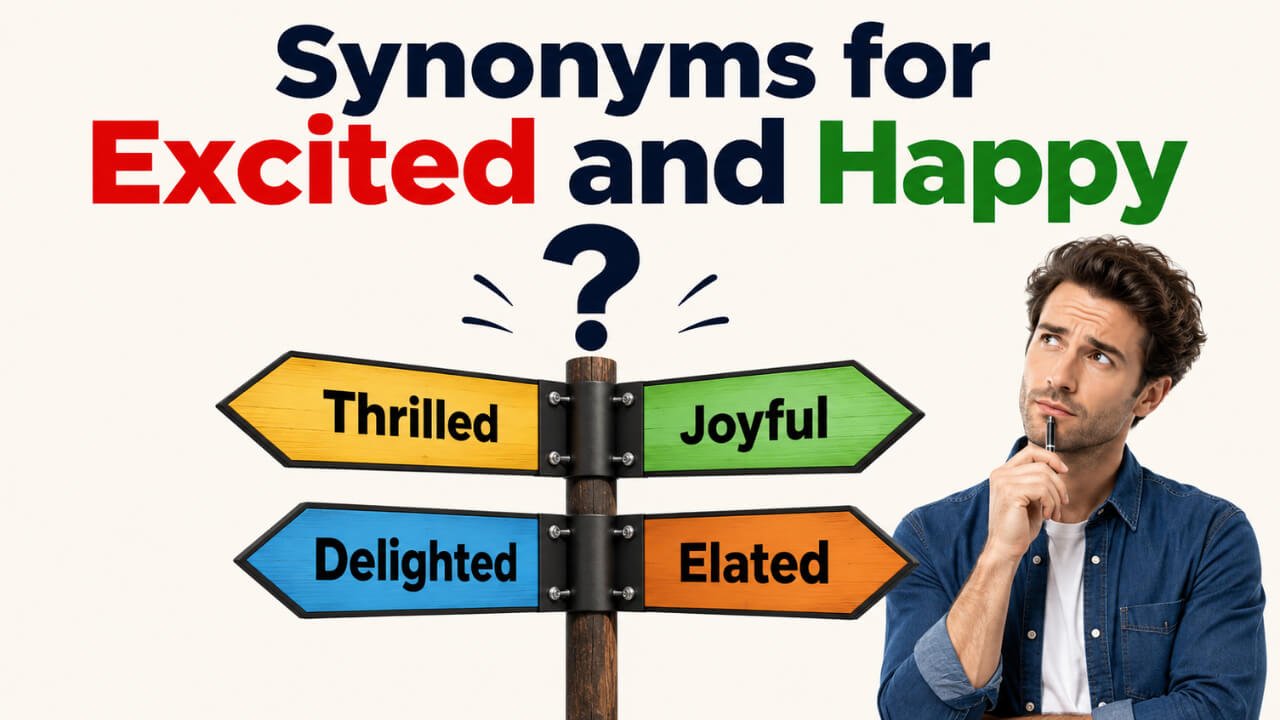
Quick Answer: The best synonyms for excited and happy include thrilled, delighted, joyful, elated, enthusiastic, ecstatic, overjoyed, jubilant, exhilarated, and cheerful. Use thrilled for strong excitement about an event or opportunity. Delighted is polite and suitable for personal or professional communication. Elated describes intense happiness after success, while enthusiastic emphasizes active interest and positive energy. Ecstatic and overjoyed express extremely strong happiness, while cheerful describes a generally bright and pleasant mood.
Pronunciation and Word Details
Word: Excited and Happy
Pronunciation: /ɪkˈsaɪtɪd ænd ˈhæpi/
Part of Speech: Adjective phrase
Meaning: Feeling strong enthusiasm, pleasure, joy, or positive anticipation.
US Pronunciation:
UK Pronunciation:
What Does “Excited and Happy” Mean?
Excited and happy means feeling both strong enthusiasm and positive emotion about an event, person, achievement, or future possibility.
Excited usually describes heightened energy, anticipation, or eagerness. Happy describes pleasure, satisfaction, contentment, or joy. When the words appear together, they communicate a lively and strongly positive emotional state.
Example: She felt excited and happy about starting her new course.
The phrase can describe a temporary reaction, such as receiving good news, or a broader emotional state, such as feeling pleased about a major life change.
It is commonly used before a noun or after a linking verb.
Before a Noun: The excited and happy children entered the hall.
After a Linking Verb: Everyone looked excited and happy.
Meaning, Tone, and Context of “Excited and Happy”
Excited and happy has a positive, emotional, and conversational tone. It is suitable for everyday speech, personal writing, greetings, announcements, descriptions, stories, and informal messages.
In professional communication, more precise words such as delighted, pleased, enthusiastic, or thrilled may sound smoother.
Casual Context: I am excited and happy to see everyone again.
Professional Context: We are delighted to welcome the new team members.
Celebratory Context: The graduates were jubilant after receiving their awards.
Emotional Context: She was overjoyed when her family arrived.
The phrase may sound repetitive because excited and happy describe related feelings. A single strong synonym can often make the sentence clearer and more expressive.
When and How to Use “Excited and Happy”
For Positive Anticipation
Use the phrase when someone is looking forward to a future event.
Example: The students are excited and happy about the upcoming trip.
For Good News
Use it when a person reacts positively to an announcement, result, or opportunity.
Example: He was excited and happy when he received the offer.
For Celebration
Use it when people are enjoying an achievement, holiday, gathering, or special occasion.
Example: The family felt excited and happy during the celebration.
For Personal Achievements
Use it when success creates both joy and emotional energy.
Example: She was excited and happy after completing the final examination.
For Welcoming Someone
Use it to express warmth about meeting, greeting, or receiving a person.
Example: We are excited and happy to welcome you to the group.
For New Experiences
Use it when someone feels positive enthusiasm about beginning something unfamiliar.
Example: The children were excited and happy to explore the new place.
Best Synonyms for Excited and Happy
Thrilled: Extremely pleased and excited about something.
Example: She was thrilled to receive the scholarship.
Delighted: Very pleased in a warm, polite, or sincere way.
Example: We are delighted to hear about your success.
Joyful: Filled with noticeable happiness and pleasure.
Example: The joyful crowd celebrated the team’s achievement.
Elated: Extremely happy because of success or good news.
Example: He felt elated after winning the competition.
Enthusiastic: Showing active interest, excitement, and positive energy.
Example: The volunteers were enthusiastic about the new project.
Ecstatic: Feeling an extremely high level of happiness and excitement.
Example: She was ecstatic when the results were announced.
Overjoyed: Filled with great happiness.
Example: His parents were overjoyed by the wonderful news.
Jubilant: Expressing great happiness after a victory or achievement.
Example: The supporters were jubilant after the final result.
Exhilarated: Feeling intensely energetic, cheerful, and excited.
Example: The hikers felt exhilarated when they reached the summit.
Cheerful: Noticeably happy, positive, and pleasant.
Example: Her cheerful expression brightened the room.
50 Synonyms for Excited and Happy with Short Meanings
- Joyful: Filled with happiness and pleasure.
- Delighted: Very pleased about something.
- Thrilled: Extremely excited and happy.
- Elated: Intensely happy after success.
- Ecstatic: Overwhelmed with happiness and excitement.
- Enthusiastic: Showing strong interest and positive energy.
- Cheerful: Bright, pleasant, and noticeably happy.
- Overjoyed: Filled with great happiness.
- Jubilant: Celebrating with intense joy.
- Exhilarated: Feeling highly energetic and excited.
- Animated: Full of lively emotion and energy.
- Eager: Excited and ready for something.
- Upbeat: Positive, hopeful, and cheerful.
- Merry: Happy, lively, and festive.
- Glad: Pleased or happy about something.
- Pleased: Feeling satisfaction or enjoyment.
- Contented: Peacefully happy and satisfied.
- Radiant: Showing happiness through a bright appearance.
- Buoyant: Cheerful, confident, and emotionally light.
- Gleeful: Expressing lively and playful happiness.
- Blissful: Experiencing complete happiness and peace.
- Euphoric: Feeling unusually intense happiness.
- Enraptured: Filled with great pleasure and admiration.
- Rapturous: Expressing intense delight or enthusiasm.
- Electrified: Suddenly filled with powerful excitement.
- Energized: Given fresh energy and enthusiasm.
- Inspired: Filled with positive motivation and excitement.
- Passionate: Showing strong enthusiasm and emotion.
- Lively: Full of cheerful activity and energy.
- Spirited: Energetic, confident, and enthusiastic.
- Vivacious: Attractively lively and cheerful.
- Exuberant: Full of uncontrolled happiness and energy.
- Celebratory: Expressing happiness about a special event.
- Festive: Cheerful and suitable for a celebration.
- Hopeful: Feeling positive about the future.
- Optimistic: Expecting good things to happen.
- Satisfied: Happy because expectations were met.
- Gratified: Pleased because of success or recognition.
- Thankful: Happy and appreciative because of something received.
- Grateful: Feeling warm appreciation and happiness.
- Amused: Entertained and pleasantly happy.
- Charmed: Pleased and attracted by someone or something.
- Enchanted: Filled with delight and admiration.
- Captivated: Deeply interested and pleasantly excited.
- Beaming: Showing great happiness through a bright smile.
- Glowing: Looking visibly pleased and proud.
- Pumped: Very excited and ready for an activity.
- Stoked: Extremely excited in casual speech.
- Over the Moon: Extremely happy and delighted.
- On Cloud Nine: Experiencing an exceptionally happy mood.
Read Also:
Synonyms for Thoughts
Synonyms for Excited and Happy by Context
When It Means Strong Happiness
Thrilled, ecstatic, overjoyed, elated, euphoric, and jubilant express powerful happiness.
Example: She was ecstatic when she learned that she had passed.
Example: The players were jubilant after their victory.
Thrilled is widely suitable in both conversation and professional communication. Ecstatic and euphoric express much stronger emotion and should be reserved for exceptional moments.
When It Means Positive Anticipation
Eager, enthusiastic, hopeful, pumped, stoked, and energized describe excitement about something that has not happened yet.
Example: The students were eager to begin the workshop.
Example: The team felt energized before the presentation.
Eager is useful when someone is ready to act. Enthusiastic shows active interest, while pumped and stoked are more casual.
When It Means General Happiness
Happy, joyful, cheerful, glad, pleased, contented, and upbeat describe a positive emotional state.
Example: She felt cheerful throughout the day.
Example: He was pleased with the final result.
Joyful expresses noticeable happiness, while contented describes a quieter and more peaceful form of happiness.
When It Means Celebration
Jubilant, festive, merry, celebratory, exuberant, and gleeful suit parties, victories, festivals, and special occasions.
Example: The atmosphere became festive as the guests arrived.
Example: The crowd gave a jubilant cheer.
Celebratory describes the mood or purpose of an event. Jubilant emphasizes intense happiness after success.
When It Means Visible Happiness
Beaming, glowing, radiant, animated, and lively describe happiness that can be seen in someone’s face, voice, or behavior.
Example: She was beaming with pride.
Example: His face looked radiant after hearing the news.
When It Means Polite Pleasure
Delighted, pleased, glad, gratified, and thankful are suitable for polite, professional, or sincere communication.
Example: We are delighted to accept your invitation.
Example: The organizers were pleased with the response.
Another Word for Excited and Happy
Thrilled is often the best single replacement for excited and happy because it combines strong happiness with emotional excitement. However, the best alternative depends on the level of emotion and the situation.
Original: She was excited and happy about the opportunity.
Better Option: She was thrilled about the opportunity.
Original: We are excited and happy to welcome you.
Better Option: We are delighted to welcome you.
Original: The winners were excited and happy after the announcement.
Better Option: The winners were jubilant after the announcement.
Original: He felt excited and happy about beginning the project.
Better Option: He felt enthusiastic about beginning the project.
When Not to Use “Excited and Happy”
Do not use excited and happy repeatedly in the same paragraph. The phrase can become vague and repetitive when a stronger single word would communicate the emotion more clearly.
Weak: She was excited and happy to receive the award.
Better: She was thrilled to receive the award.
Avoid the phrase in formal writing when a more precise emotional description is available.
Weak: The committee was excited and happy with the findings.
Better: The committee was pleased with the findings.
Do not use it when the emotion is quiet rather than energetic.
Weak: He felt excited and happy while relaxing at home.
Better: He felt peaceful and contented while relaxing at home.
Avoid overly strong synonyms for minor events.
Weak: She was ecstatic that the meeting ended five minutes early.
Better: She was pleased that the meeting ended five minutes early.
Words Commonly Confused With Excited and Happy
Excited vs Happy: Excited describes heightened energy or anticipation, while happy describes pleasure, satisfaction, or joy.
Excited vs Eager: Excited focuses on emotional energy, while eager suggests readiness and a strong desire to act.
Happy vs Contented: Happy can be lively or temporary, while contented describes quiet and lasting satisfaction.
Thrilled vs Delighted: Thrilled is stronger and more energetic. Delighted is warm, polite, and suitable for professional communication.
Ecstatic vs Pleased: Ecstatic expresses extreme happiness, while pleased describes moderate satisfaction.
Enthusiastic vs Energetic: Enthusiastic means strongly interested and positive. Energetic means physically or mentally active.
Joyful vs Cheerful: Joyful describes deep or noticeable happiness. Cheerful describes a consistently bright and pleasant mood.
Elated vs Excited: Elated usually follows success or good news. Excited can describe positive anticipation before an event.
Which Synonym Should You Choose?
Choose thrilled when someone feels strongly happy and excited about news, an invitation, or an opportunity.
Choose delighted for polite messages, welcomes, announcements, and professional communication.
Choose joyful when describing genuine happiness during a meaningful event.
Choose elated when success, achievement, or recognition produces intense happiness.
Choose enthusiastic when someone shows active interest in an idea, project, or activity.
Choose eager when someone is excited and ready to begin.
Choose ecstatic when the emotion is exceptionally powerful.
Choose jubilant for victories, celebrations, and public expressions of happiness.
Choose contented for quiet satisfaction without intense excitement.
Choose cheerful for a bright, friendly, and pleasant mood.
Choose pumped or stoked in relaxed conversation when describing strong anticipation.
Real Life Examples of “Excited and Happy” in Sentences
Original: She was excited and happy to begin her new job.
Better Option: She was enthusiastic about beginning her new job.
Original: The children were excited and happy about the trip.
Better Option: The children were thrilled about the trip.
Original: We are excited and happy to announce the results.
Better Option: We are delighted to announce the results.
Original: He felt excited and happy after winning the award.
Better Option: He felt elated after winning the award.
Original: The supporters were excited and happy after the victory.
Better Option: The supporters were jubilant after the victory.
Original: Her parents were excited and happy to see her.
Better Option: Her parents were overjoyed to see her.
Original: Everyone looked excited and happy at the celebration.
Better Option: Everyone looked cheerful at the celebration.
Original: I am excited and happy about the upcoming event.
Better Option: I am eager for the upcoming event.
Original: The successful result made the researchers excited and happy.
Better Option: The successful result left the researchers gratified.
Original: She looked excited and happy while opening the gift.
Better Option: She looked delighted while opening the gift.
Synonym Groups and Usage Differences
Intense Joy Group
Ecstatic, elated, euphoric, overjoyed, and rapturous communicate exceptionally strong happiness.
Use these words for major achievements, reunions, victories, or life changing news.
Example: The family was overjoyed by the announcement.
Enthusiasm Group
Enthusiastic, eager, energized, passionate, pumped, and stoked describe positive excitement about an activity or future event.
Enthusiastic is versatile, while pumped and stoked are more conversational.
Example: The participants were enthusiastic about the challenge.
Cheerful Mood Group
Cheerful, upbeat, merry, lively, buoyant, and spirited describe a positive and energetic mood.
These words often describe someone’s personality, behavior, or general emotional state.
Example: Her upbeat attitude encouraged the whole group.
Satisfaction Group
Pleased, satisfied, contented, gratified, glad, and thankful express happiness connected with comfort, success, or appreciation.
These choices are usually calmer than thrilled or ecstatic.
Example: The manager was satisfied with the final report.
Celebration Group
Jubilant, festive, celebratory, gleeful, and exuberant suit victories, parties, ceremonies, and important occasions.
Example: A festive mood filled the hall.
Visible Happiness Group
Beaming, radiant, glowing, animated, and vivacious describe happiness shown through appearance, expression, or behavior.
Example: She was beaming as she accepted the prize.
Antonyms of Excited and Happy
The opposites of excited and happy depend on whether the intended meaning involves energy, anticipation, pleasure, or satisfaction.
Sad: Feeling unhappy or sorrowful.
Unhappy: Not pleased or satisfied.
Miserable: Extremely unhappy or uncomfortable.
Disappointed: Unhappy because expectations were not met.
Depressed: Experiencing deep sadness and low energy.
Gloomy: Dark, unhappy, or lacking hope.
Bored: Uninterested and lacking excitement.
Unenthusiastic: Showing little interest or excitement.
Indifferent: Having no strong interest or emotional reaction.
Calm: Free from heightened excitement.
Nervous: Worried or uneasy about what may happen.
Discouraged: Having lost confidence or enthusiasm.
Dissatisfied: Not pleased with a result or situation.
Pessimistic: Expecting an unfavorable result.
Unmoved: Not emotionally affected.
Comparison Between Excited and Happy and Related Words
Excited and Happy vs Thrilled
Excited and happy is a general phrase. Thrilled is more concise and expresses both emotions strongly.
Example With Excited and Happy: She was excited and happy about the invitation.
Example With Thrilled: She was thrilled about the invitation.
Excited and Happy vs Delighted
Excited and happy sounds conversational. Delighted sounds polished, warm, and polite.
Example With Excited and Happy: We are excited and happy to meet you.
Example With Delighted: We are delighted to meet you.
Excited and Happy vs Elated
Excited and happy can apply before or after an event. Elated usually describes intense happiness after success or good news.
Example With Excited and Happy: He was excited and happy before the competition.
Example With Elated: He was elated after winning the competition.
Excited and Happy vs Enthusiastic
Excited and happy describes emotion. Enthusiastic emphasizes active interest and willingness to participate.
Example With Excited and Happy: The students were excited and happy about the project.
Example With Enthusiastic: The students were enthusiastic about the project.
Excited and Happy vs Contented
Excited and happy suggests energy and emotional movement. Contented suggests peaceful satisfaction.
Example With Excited and Happy: She felt excited and happy about the journey.
Example With Contented: She felt contented with her peaceful routine.
Common Phrases and Expressions With Excited and Happy
Excited and Happy to Announce: Used when sharing positive news.
Excited and Happy to Join: Used when beginning a new role, group, or activity.
Excited and Happy to Help: Expresses enthusiasm about offering support.
Excited and Happy to Meet You: Shows pleasure about meeting someone.
Excited and Happy for You: Expresses joy about another person’s success.
Excited and Happy About the Future: Shows positive anticipation.
So Excited and Happy: Adds emotional emphasis in casual communication.
Truly Excited and Happy: Expresses sincere positive emotion.
Both Excited and Happy: Emphasizes the presence of two related feelings.
Feeling Excited and Happy: Describes someone’s current emotional condition.
Common Mistakes to Avoid
One common mistake is treating excited and happy as exact synonyms. Excited refers mainly to emotional energy and anticipation, while happy refers to pleasure and satisfaction.
Avoid using two or three intense synonyms together. A sentence such as “She was ecstatic, thrilled, and overjoyed” may sound exaggerated unless the event is truly exceptional.
Choose the emotional strength carefully. Pleased is suitable for moderate satisfaction, while ecstatic should describe an extraordinary reaction.
Do not use casual words such as pumped or stoked in formal reports or professional announcements.
Avoid repeating excited and happy throughout an article. Replace it with precise words such as delighted, enthusiastic, joyful, thrilled, or contented according to the context.
Conclusion
Understanding synonyms for excited and happy helps you describe positive emotions with greater accuracy and variety. Thrilled combines strong happiness and excitement, while delighted is ideal for polite communication. Elated suits success, enthusiastic shows active interest, and jubilant works well for celebrations. Cheerful describes a bright mood, while contented expresses calm satisfaction. Choosing the right word allows your sentence to match the strength, purpose, and context of the emotion.
FAQs About Synonyms for Excited and Happy
What Is the Best Synonym for Excited and Happy?
Thrilled is one of the best general synonyms because it expresses both strong excitement and happiness.
What Is a Formal Synonym for Excited and Happy?
Delighted, pleased, enthusiastic, and gratified are suitable choices for formal or professional communication.
What Is a Stronger Word Than Happy?
Ecstatic, overjoyed, elated, euphoric, and jubilant express stronger happiness than happy.
What Word Describes Happy Excitement?
Thrilled, exhilarated, enthusiastic, and ecstatic can all describe happy excitement.
Can Delighted Replace Excited and Happy?
Yes. Delighted is an excellent replacement when expressing warm, sincere, or polite pleasure.
What Is a Casual Synonym for Excited and Happy?
Pumped, stoked, over the moon, and on cloud nine are common casual alternatives.
What Is the Difference Between Thrilled and Excited?
Excited describes heightened emotion or anticipation. Thrilled specifically communicates intense positive excitement and pleasure.
