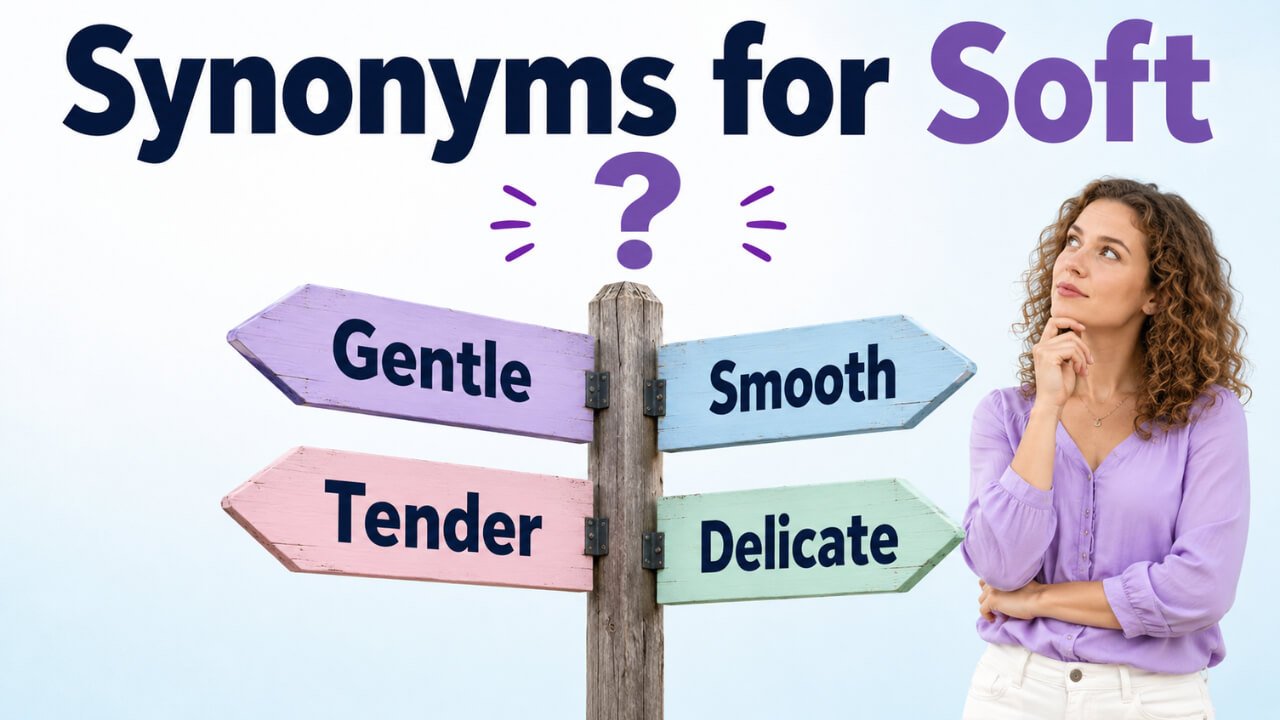
Quick Answer: Synonyms for soft include gentle, tender, smooth, silky, velvety, mild, quiet, muted, delicate, and cushioned. The best synonym depends on context. Use gentle for behavior or touch, smooth for texture, quiet for sound, mild for weather or flavor, tender for emotion or care, and muted for light, color, or tone.
Pronunciation and Word Details
Word: Soft
Pronunciation: /sɔːft/
Part of Speech: Adjective
Meaning: Pleasantly gentle, smooth, quiet, mild, easy, or not hard.
US Pronunciation:
UK Pronunciation:
What Does “Soft” Mean?
Soft means: Not hard, rough, loud, strong, harsh, or severe.
Part of speech: Soft is mainly used as an adjective. It can describe texture, sound, light, color, personality, emotion, weather, rules, flavor, and strength.
Main uses: Soft can describe a pillow, a voice, a gentle person, a mild flavor, a weak answer, a dim color, or a relaxed rule. Because soft has many meanings, the best synonym changes with the sentence.
Example: The blanket feels soft against the skin.
Simple meaning: Soft usually means gentle, smooth, mild, quiet, or easy to press.
Meaning, Tone, and Context of “Soft”
Tone: Soft is usually neutral, positive, and simple. It can sound warm when describing comfort, kindness, beauty, or tenderness.
Common context: Soft is used in everyday speech, writing, descriptions, product language, personality descriptions, weather reports, food descriptions, sound descriptions, and emotional writing.
Physical context: Soft can describe something that is pleasant to touch, such as fabric, skin, grass, or a cushion.
Emotional context: Soft can mean kind, tender, sensitive, or gentle.
Sound context: Soft can mean quiet, low, calm, or not loud.
Light and color context: Soft can mean muted, gentle, pale, or not bright.
Negative context: Soft can sometimes mean weak, too easy, not strict, or lacking force.
When and How to Use “Soft”
For Texture: Use soft when something is smooth, comfortable, or easy to press.
Example: The sofa was soft and comfortable.
For Sound: Use soft when a sound is quiet, calm, or not harsh.
Example: She spoke in a soft voice.
For Personality: Use soft when someone is gentle, kind, or sensitive.
Example: He has a soft heart and helps everyone.
For Light: Use soft when light is gentle, warm, or not bright.
Example: The room was filled with soft morning light.
For Color: Use soft when a color looks pale, muted, or gentle.
Example: She chose soft pink curtains for the bedroom.
For Flavor: Use soft when a taste is mild, light, or not strong.
Example: The cheese had a soft, creamy flavor.
For Rules or Discipline: Use soft when someone is not strict enough.
Example: The coach was too soft on careless mistakes.
For Weakness: Use soft when something lacks strength, force, or firmness.
Example: His argument was soft and needed stronger evidence.
Best Synonyms for Soft
Gentle: Kind, calm, mild, or not harsh.
Example: She gave the child a gentle smile.
Tender: Warm, caring, delicate, or emotionally kind.
Example: His tender words comforted her.
Smooth: Even, pleasant, and not rough.
Example: The stone felt smooth in her hand.
Silky: Very smooth and soft like silk.
Example: The lotion left her skin silky.
Velvety: Rich, smooth, and softly textured.
Example: The cake had a velvety texture.
Mild: Not strong, harsh, or severe.
Example: The soup had a mild flavor.
Quiet: Low in sound or not loud.
Example: He answered in a quiet voice.
Muted: Softened in color, sound, or tone.
Example: The room had muted green walls.
Delicate: Light, fine, gentle, or easily damaged.
Example: The flower had delicate petals.
Cushioned: Softened or protected by padding.
Example: The chair had a cushioned seat.
50 Synonyms for Soft with Short Meanings
- Gentle: Calm, kind, or not harsh.
- Tender: Caring, delicate, or emotionally warm.
- Smooth: Even and not rough.
- Silky: Very smooth and soft.
- Velvety: Soft, rich, and smooth in texture.
- Mild: Not strong or severe.
- Quiet: Low in sound.
- Muted: Softened in color, sound, or tone.
- Delicate: Fine, light, or easily damaged.
- Cushioned: Softened with padding.
- Plush: Thick, soft, and comfortable.
- Fluffy: Light, airy, and soft.
- Downy: Covered with soft fine hair or feathers.
- Fleecy: Soft and wool like.
- Cottony: Soft and light like cotton.
- Pillowy: Soft and comfortable like a pillow.
- Supple: Soft, flexible, and easily bent.
- Pliable: Easily bent or shaped.
- Flexible: Able to bend without breaking.
- Malleable: Easily shaped or influenced.
- Yielding: Giving way under pressure.
- Squishy: Soft and easily squeezed.
- Spongy: Soft, springy, and full of small spaces.
- Springy: Soft but able to bounce back.
- Creamy: Smooth, rich, and soft in texture.
- Buttery: Smooth, rich, and gentle in feel or taste.
- Fine: Smooth, thin, or delicate.
- Light: Gentle, not heavy, or not strong.
- Feathery: Light and soft like feathers.
- Airy: Light, soft, and open.
- Hushed: Very quiet and calm.
- Low: Not loud in sound.
- Subdued: Quiet, gentle, or controlled.
- Faint: Weak, light, or barely noticeable.
- Pale: Light and not strong in color.
- Warm: Gentle, pleasant, and comforting.
- Soothing: Calming and comforting.
- Calm: Peaceful and not rough or loud.
- Kind: Caring and gentle in behavior.
- Compassionate: Caring toward others.
- Sensitive: Easily affected or emotionally aware.
- Lenient: Not strict or severe.
- Easygoing: Relaxed and not strict.
- Relaxed: Calm, loose, or not tense.
- Mellow: Smooth, calm, or pleasantly mild.
- Weak: Lacking strength or firmness.
- Lightweight: Not heavy or forceful.
- Faded: Less bright or less strong.
- Dulcet: Pleasant, sweet, and gentle in sound.
- Sweet: Pleasant, gentle, or kind.
Read Also:
Synonyms for Foster

Synonyms for Soft by Context
When Soft Means Gentle
Best synonyms: Gentle, tender, kind, compassionate, soothing, calm.
Gentle example: She gave the baby a gentle touch.
Tender example: His tender reply made her feel safe.
Soothing example: The nurse used a soothing voice.
When Soft Means Smooth or Pleasant to Touch
Best synonyms: Smooth, silky, velvety, plush, fluffy, cushioned.
Smooth example: The fabric felt smooth against the skin.
Silky example: The scarf had a silky finish.
Plush example: The hotel room had plush carpets.
When Soft Means Quiet
Best synonyms: Quiet, low, hushed, subdued, faint, dulcet.
Quiet example: He spoke in a quiet tone.
Hushed example: The room fell into a hushed silence.
Dulcet example: Her dulcet voice filled the room gently.
When Soft Means Mild
Best synonyms: Mild, mellow, light, gentle, warm, soothing.
Mild example: The sauce has a mild taste.
Mellow example: The music created a mellow mood.
Light example: The breeze was light and pleasant.
When Soft Means Not Strict
Best synonyms: Lenient, easygoing, relaxed, forgiving, tolerant, mild.
Lenient example: The teacher was lenient about late homework.
Easygoing example: His easygoing style made the team feel comfortable.
Relaxed example: The office has a relaxed dress code.
When Soft Means Weak
Best synonyms: Weak, faint, lightweight, yielding, mild, thin.
Weak example: The excuse sounded weak.
Faint example: There was a faint smell of smoke.
Lightweight example: His argument felt lightweight without evidence.
Another Word for Soft
Best single replacement: The best general synonym for soft is gentle, especially when soft means calm, kind, mild, or not harsh. However, the best alternative depends on context. Use smooth for texture, quiet for sound, mild for flavor or weather, and lenient when soft means not strict.
Original: She has a soft voice.
Better Option: She has a quiet voice.
Original: The fabric is soft.
Better Option: The fabric is smooth.
Original: He gave her a soft smile.
Better Option: He gave her a gentle smile.
Original: The teacher was soft with the rules.
Better Option: The teacher was lenient with the rules.
When Not to Use “Soft”
Avoid vague use: Soft can be unclear when the reader needs a more exact meaning.
Weak: The design looks soft.
Better: The design uses muted colors and gentle lighting.
Avoid wrong synonym choice: Do not use gentle when you mean physically smooth.
Weak: The blanket feels gentle.
Better: The blanket feels smooth and plush.
Avoid using soft for weak arguments in formal writing: If you mean weak, say weak, unsupported, or unconvincing.
Weak: The essay has a soft argument.
Better: The essay has an unsupported argument.
Avoid casual use in serious descriptions: Soft can sound too simple if the context needs precision.
Weak: The material is soft.
Better: The material is flexible, cushioned, and smooth.
Avoid using soft when mild is clearer: For taste, weather, or medicine, mild often works better.
Weak: The curry is soft.
Better: The curry is mild.
Words Commonly Confused With Soft
Soft vs Gentle: Soft often describes texture, sound, light, or behavior. Gentle usually describes actions, personality, touch, or tone.
Soft vs Smooth: Soft means not hard or harsh. Smooth means not rough, uneven, or bumpy.
Soft vs Mild: Soft can describe many things. Mild is better for weather, flavor, pain, medicine, or behavior that is not strong.
Soft vs Quiet: Soft can mean low in sound, but quiet is more direct when talking about volume.
Soft vs Tender: Soft can describe texture or tone. Tender usually suggests care, emotion, sensitivity, or delicate feeling.
Soft vs Delicate: Soft means gentle or not hard. Delicate means fine, fragile, light, or easily damaged.
Soft vs Weak: Soft can be positive or neutral. Weak is usually negative and means lacking strength, force, or support.
Which Synonym Should You Choose?
Choose gentle: When writing about touch, behavior, personality, care, or a kind action.
Choose smooth: When writing about texture, surfaces, skin, fabric, or movement.
Choose silky: When something feels very smooth and soft.
Choose velvety: When something feels rich, deep, and smooth.
Choose mild: When writing about flavor, weather, pain, medicine, or a light effect.
Choose quiet: When writing about a voice, sound, or noise level.
Choose muted: When writing about color, light, sound, or tone that is softened.
Choose tender: When writing about emotion, care, love, sensitivity, or delicate feeling.
Choose lenient: When soft means not strict with rules or discipline.
Choose weak: When soft means lacking force, evidence, strength, or firmness.
Real Life Examples of “Soft” in Sentences
Original: The blanket is soft and warm.
Better Option: The blanket is plush and warm.
Original: She spoke in a soft voice.
Better Option: She spoke in a quiet voice.
Original: The wall color is soft and peaceful.
Better Option: The wall color is muted and peaceful.
Original: He gave her a soft look.
Better Option: He gave her a gentle look.
Original: The bread was soft inside.
Better Option: The bread was fluffy inside.
Original: The teacher was soft about deadlines.
Better Option: The teacher was lenient about deadlines.
Original: The music was soft in the background.
Better Option: The music was subdued in the background.
Original: The baby has soft skin.
Better Option: The baby has smooth skin.
Original: The soup has a soft flavor.
Better Option: The soup has a mild flavor.
Original: His answer was soft and unclear.
Better Option: His answer was weak and unclear.
Synonym Groups and Usage Differences
Texture Group
Use: This group works when soft means pleasant to touch, smooth, or not hard.
Synonyms: Smooth, silky, velvety, plush, fluffy, cushioned.
Example: The pillow felt plush and comfortable.
Sound Group
Use: This group works when soft means not loud, calm, or low in volume.
Synonyms: Quiet, hushed, low, subdued, faint, dulcet.
Example: A hushed voice came from the next room.
Gentle Behavior Group
Use: This group works when soft means kind, caring, or emotionally warm.
Synonyms: Gentle, tender, kind, compassionate, soothing.
Example: Her compassionate response helped him relax.
Mild Effect Group
Use: This group works when soft means not strong, harsh, bright, or intense.
Synonyms: Mild, mellow, light, warm, muted, pale.
Example: The room had warm light and muted colors.
Flexible Material Group
Use: This group works when soft means bendable, flexible, or easy to shape.
Synonyms: Supple, pliable, flexible, malleable, yielding.
Example: The leather became supple after careful treatment.
Weakness Group
Use: This group works when soft means not strong, strict, firm, or convincing.
Synonyms: Weak, lenient, easygoing, relaxed, lightweight.
Example: The policy sounded lenient compared with the old rules.
Antonyms of Soft
Hard: Firm, solid, or difficult to press.
Rough: Uneven, harsh, or not smooth.
Harsh: Severe, unpleasant, or sharp in tone.
Loud: Strong or high in sound.
Bright: Strong in light or color.
Strong: Powerful, firm, or intense.
Firm: Solid, steady, or not easily changed.
Strict: Demanding careful obedience to rules.
Severe: Very serious, harsh, or intense.
Tough: Strong, hard, or difficult to damage.
Sharp: Clear, strong, pointed, or intense.
Coarse: Rough in texture or manner.
Comparison: Soft vs Related Words
Soft vs Gentle
Difference: Soft can describe texture, sound, light, color, or behavior. Gentle usually describes kind actions, mild force, or calm behavior.
Example With Soft: The cat has soft fur.
Example With Gentle: The child gave the cat a gentle touch.
Soft vs Smooth
Difference: Soft means not hard or harsh. Smooth means even, polished, and not rough.
Example With Soft: The cushion is soft.
Example With Smooth: The table surface is smooth.
Soft vs Mild
Difference: Soft is broader and can describe texture, sound, color, or behavior. Mild is more specific for low strength, light effect, weather, pain, or taste.
Example With Soft: The light in the room was soft.
Example With Mild: The weather was mild in the evening.
Soft vs Quiet
Difference: Soft can mean quiet, but quiet directly describes low sound or silence.
Example With Soft: She played soft music.
Example With Quiet: She played quiet music.
Soft vs Tender
Difference: Soft can describe physical texture or gentle quality. Tender often describes care, emotion, sensitivity, or delicate feeling.
Example With Soft: The blanket felt soft.
Example With Tender: His tender words comforted her.
Soft vs Weak
Difference: Soft is not always negative. Weak usually means lacking strength, force, support, or power.
Example With Soft: The room had soft lighting.
Example With Weak: The argument was weak without proof.
Common Phrases and Expressions With Soft
Soft Touch: A gentle touch or a person who is easily persuaded.
Soft Voice: A quiet, gentle voice.
Soft Light: Gentle light that is not bright or harsh.
Soft Color: A pale, muted, or gentle color.
Soft Skin: Smooth and pleasant skin.
Soft Fabric: Material that feels smooth or comfortable.
Soft Heart: A kind, caring, or emotional nature.
Soft Answer: A calm and gentle reply.
Soft Skills: Personal abilities such as communication, teamwork, and patience.
Soft Spot: A warm feeling, weakness, or special affection for someone or something.
Common Mistakes to Avoid
Mistake with repetition: Do not repeat soft too many times in one paragraph. Use gentle, smooth, mild, quiet, muted, plush, or tender when they fit better.
Mistake with texture: Do not use quiet, mild, or gentle when you are clearly describing how something feels. Use smooth, silky, velvety, plush, or cushioned instead.
Mistake with sound: Do not use smooth for volume. Use quiet, low, hushed, or subdued when describing sound.
Mistake with flavor: Soft is not always natural for food taste. Mild, creamy, light, or mellow may sound clearer.
Mistake with negative meaning: When soft means not strong, use weak, lenient, unsupported, or unconvincing if you want a more exact word.
Mistake with vague description: Soft can describe many things, so add context when needed. A soft color, soft voice, soft fabric, and soft rule do not mean the same thing.
Conclusion
Conclusion: Synonyms for soft help you describe texture, sound, light, color, personality, flavor, rules, and strength more clearly. Use gentle for kind actions, smooth for texture, quiet for sound, mild for flavor or weather, muted for color, and lenient when soft means not strict. Because soft has many meanings, the best synonym depends on the exact sentence. Choosing the right word makes your writing more natural, accurate, and useful.
FAQs About Synonyms for Soft
What is the best synonym for soft?
Answer: The best general synonym for soft is gentle, especially when soft means kind, calm, mild, or not harsh.
What is a synonym for soft texture?
Answer: Good synonyms for soft texture include smooth, silky, velvety, plush, fluffy, and cushioned.
What is a synonym for soft voice?
Answer: Good synonyms for soft voice include quiet, low, hushed, subdued, and gentle.
What is a formal synonym for soft?
Answer: Formal synonyms for soft include delicate, subdued, muted, mild, supple, and lenient, depending on context.
What is another word for soft hearted?
Answer: Another word for soft hearted is kind, tender, compassionate, sensitive, or caring.
What is the opposite of soft?
Answer: The opposite of soft can be hard, rough, harsh, loud, strong, firm, or strict, depending on the meaning.
Is soft the same as gentle?
Answer: Soft and gentle are related, but they are not always the same. Soft can describe texture, sound, light, or behavior, while gentle usually describes kind action, mild force, or calm behavior.
