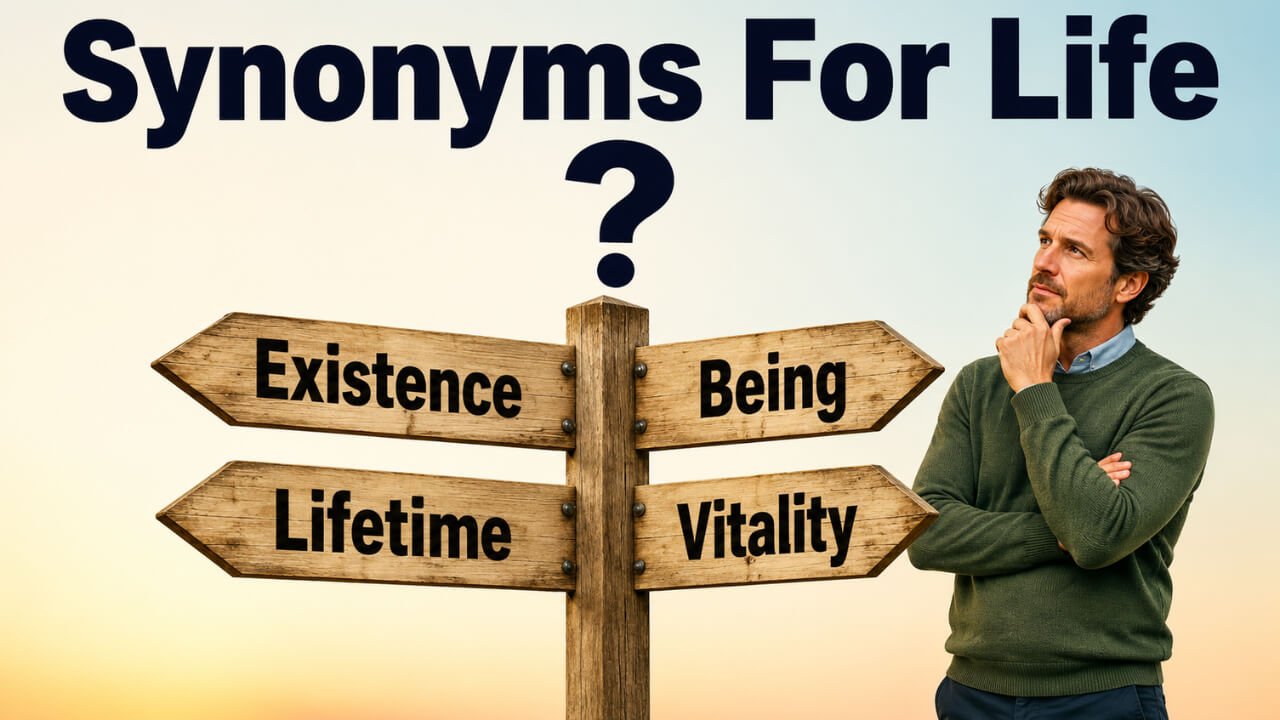
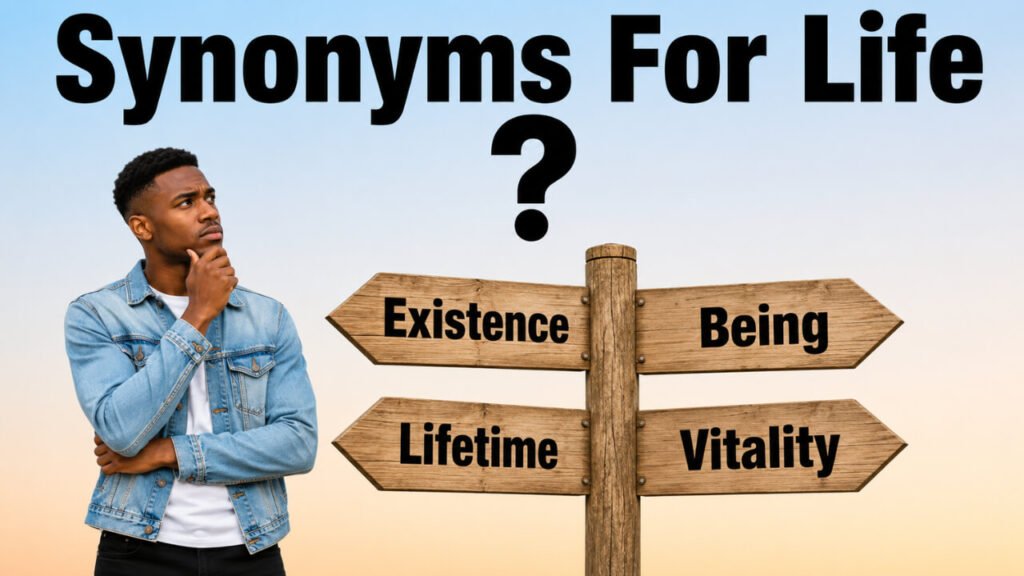
Quick Answer: The best synonyms for life include existence, living, being, lifetime, lifespan, vitality, energy, spirit, experience, and journey. Use existence when talking about the state of being alive. Use lifetime or lifespan when referring to the period someone lives. Use vitality, energy, or spirit when describing liveliness. Use experience or journey when talking about personal growth, events, and the way someone lives.
Pronunciation and Word Details
Word: Life.
Pronunciation: /laɪf/
Part of Speech: Noun.
Meaning: The state of being alive, the period of living, or the experiences and activities that make up a person’s existence.
US Pronunciation:
UK Pronunciation:
What Does “Life” Mean?
Life means the state of being alive or the time, experience, energy, and activities connected with living.
The word life is a noun. It can describe biological existence, personal experience, a person’s lifetime, a way of living, or the energy that makes someone or something feel active. For example, life can mean survival in “protect human life,” personal experience in “life teaches lessons,” or energy in “the room was full of life.”
In grammar, life can be countable or uncountable. Use life for the general idea of living. Use a life for one person’s existence. Use lives as the plural form.
Meaning, Tone, and Context of “Life”
Life is a neutral and meaningful word. It can sound emotional, philosophical, scientific, personal, or conversational depending on context.
In everyday speech, life often refers to daily experience, family, work, emotions, choices, and personal growth. In formal writing, it can refer to existence, survival, human welfare, biology, society, or quality of living. In emotional writing, life may suggest purpose, struggle, hope, love, change, or memory.
The word is common in vocabulary lessons, grammar examples, essays, speeches, personal stories, health discussions, and reflective writing.
When and How to Use “Life”
For Existence: Use life when talking about the state of being alive.
Example: Water is necessary for life.
For Lifetime: Use life when referring to the full period someone lives.
Example: She spent her life helping others.
For Daily Experience: Use life when describing ordinary activities, responsibilities, and routines.
Example: City life can feel busy and demanding.
For Energy: Use life when something feels active, bright, or full of movement.
Example: The music brought life to the celebration.
For Personal Journey: Use life when discussing growth, lessons, changes, and experiences.
Example: Life often teaches patience through challenges.
Best Synonyms for Life
Existence: The state of being alive or real.
Example: Human existence depends on food, water, and shelter.
Living: The act or condition of being alive.
Example: Healthy living can improve daily comfort.
Being: The state or nature of existing.
Example: Every being deserves care and respect.
Lifetime: The period from birth to death.
Example: He achieved many goals in his lifetime.
Lifespan: The length of time a person, animal, or thing lives.
Example: Some trees have a very long lifespan.
Vitality: Strong energy, health, and liveliness.
Example: Her vitality made everyone feel encouraged.
Energy: Strength, activity, and liveliness.
Example: The children filled the room with energy.
Spirit: Inner strength, courage, or liveliness.
Example: His spirit remained strong during hard times.
Experience: The events and lessons a person goes through.
Example: Travel can add rich experience to life.
Journey: A person’s path through events, growth, and change.
Example: Education became an important part of her journey.
50 Synonyms for Life with Short Meanings
- Existence: The state of being alive or real.
- Living: The condition or act of being alive.
- Being: A state of existence or a living person.
- Aliveness: The quality of being alive.
- Survival: Continued existence despite danger or difficulty.
- Lifetime: The full period someone lives.
- Lifespan: The length of life of a person, animal, or thing.
- Years: The period of time someone lives.
- Days: A poetic way to describe someone’s time alive.
- Vitality: Strong life energy and health.
- Energy: Active strength, movement, or liveliness.
- Vigor: Physical strength and active force.
- Liveliness: Active, cheerful, and energetic quality.
- Vivacity: Bright, lively, and spirited energy.
- Animation: Energy, movement, or living activity.
- Spirit: Inner energy, courage, or liveliness.
- Soul: Deep inner nature or spiritual life.
- Essence: The most important nature of something.
- Spark: A small sign of energy or life.
- Zest: Enjoyment, enthusiasm, and lively interest.
- Verve: Stylish energy and spirited force.
- Drive: Inner motivation and active determination.
- Pulse: A sign of living movement or activity.
- Breath: A basic sign of life or living presence.
- Consciousness: Awareness and mental life.
- Sentience: The ability to feel and experience.
- Reality: Actual experience or real existence.
- Experience: Events, lessons, and moments in living.
- Journey: A person’s path through life events.
- Story: The events and meaning of a person’s life.
- Biography: A written account of someone’s life.
- Memoir: Personal memories from someone’s life.
- History: The record of past life events.
- Lifestyle: The way a person lives.
- Way of life: A person’s usual habits, values, and routines.
- Daily routine: Regular activities in everyday life.
- Routine: A repeated pattern of daily living.
- Livelihood: The work or income that supports life.
- Career: A person’s working life.
- Occupation: Work or profession within daily life.
- Human experience: The shared reality of being human.
- Mortal existence: Human life with a natural end.
- Earthly existence: Life in the physical world.
- Living being: A person, animal, or organism that is alive.
- Person: A human life or individual.
- Individual: One separate living person.
- Creature: A living animal or being.
- Organism: A living thing such as a plant, animal, or person.
- State of being: The condition of existing.
- Condition: The situation or quality of living.
Read Also:
Synonyms for Another

Synonyms for Life by Context
When Life Means Existence
Existence: Life as the state of being alive or real.
Example: Existence depends on the basic needs of living things.
Living: Life as the condition of being alive.
Example: Living requires food, water, and shelter.
Being: Life as a state of existence.
Example: Every being has a place in nature.
Survival: Life continuing through difficulty.
Example: Survival became their main concern during the storm.
When Life Means Lifetime
Lifetime: The complete period of someone’s life.
Example: She collected wisdom throughout her lifetime.
Lifespan: The length of time something lives.
Example: Good care may increase an animal’s lifespan.
Years: The time someone spends alive.
Example: He used his years to build a peaceful home.
Days: A literary way to describe time lived.
Example: In her later days, she enjoyed quiet mornings.
When Life Means Energy
Vitality: Healthy and active life energy.
Example: His vitality returned after proper rest.
Energy: Active force or liveliness.
Example: The class was full of energy.
Vigor: Strong physical or mental power.
Example: She worked with vigor and confidence.
Liveliness: A cheerful and active quality.
Example: The festival added liveliness to the town.
Zest: Joyful enthusiasm for living.
Example: He faced every morning with zest.
When Life Means Experience
Experience: The events and lessons of living.
Example: Experience helped her make wiser decisions.
Journey: Life as a path of change and growth.
Example: His journey taught him courage.
Story: The meaningful events of someone’s life.
Example: Her story encouraged many people.
History: A record of past life events.
Example: His family history shaped his values.
When Life Means Way of Living
Lifestyle: The habits and choices that shape life.
Example: A balanced lifestyle supports better health.
Way of life: The usual pattern of living.
Example: Farming was their way of life.
Daily routine: The regular actions of everyday life.
Example: Her daily routine included reading and walking.
Livelihood: The work or income that supports life.
Example: Fishing was their main livelihood.
Another Word for Life
The best single replacement for life is often existence when you mean the state of being alive. However, the best alternative depends on context. Use lifetime for the full period someone lives, vitality for energy, experience for personal events, and lifestyle for the way someone lives.
Original: Life is precious.
Better Option: Existence is precious.
Original: He spent his life learning.
Better Option: He spent his lifetime learning.
Original: The room was full of life.
Better Option: The room was full of energy.
Original: Her life changed after the move.
Better Option: Her experience changed after the move.
When Not to Use “Life”
Do not use life when a more exact word gives a clearer meaning. The word can feel too broad if the reader needs to know whether you mean existence, lifetime, energy, routine, health, or personal experience.
Weak: His life was long.
Better: His lifespan was long.
Weak: The party had life.
Better: The party had energy.
Weak: She wrote about his life.
Better: She wrote his biography.
Weak: Life in this sentence means work.
Better: Career in this sentence means work.
Avoid repeating life too often in one paragraph. Use existence, lifetime, experience, lifestyle, vitality, or journey to make your writing clearer and more natural.
Words Commonly Confused With Life
Life vs Living: Life is the state, period, or experience of being alive. Living can mean the act of being alive or the way someone earns money.
Life vs Existence: Life often includes feelings, activities, and experiences. Existence focuses more on simply being alive or being real.
Life vs Lifetime: Life can mean many things, including energy or experience. Lifetime means the full period from birth to death.
Life vs Lifespan: Life is general. Lifespan is more specific and refers to the length of time someone or something lives.
Life vs Lifestyle: Life is the broader idea of living. Lifestyle means habits, routines, choices, and daily patterns.
Life vs Vitality: Life can mean existence or experience. Vitality means strong energy, health, and liveliness.
Which Synonym Should You Choose?
Choose existence when writing about the state of being alive, human reality, nature, survival, or philosophical meaning.
Choose living when describing the act or condition of being alive, daily habits, or healthy behavior.
Choose lifetime when referring to the complete period of someone’s life.
Choose lifespan when discussing the length of life of people, animals, plants, or objects.
Choose vitality when describing health, strength, and active energy.
Choose energy when talking about liveliness in a room, event, person, or situation.
Choose experience when writing about lessons, events, growth, memories, or personal change.
Choose journey when writing in an emotional, reflective, or motivational tone.
Choose lifestyle when discussing habits, routines, health choices, work patterns, or daily behavior.
Real Life Examples of “Life” in Sentences
Original: Life is full of lessons.
Better Option: Experience is full of lessons.
Original: She lived a peaceful life.
Better Option: She lived a peaceful existence.
Original: His life was dedicated to teaching.
Better Option: His lifetime was dedicated to teaching.
Original: The garden is full of life.
Better Option: The garden is full of vitality.
Original: City life can be stressful.
Better Option: City living can be stressful.
Original: He wrote a book about her life.
Better Option: He wrote a biography about her.
Original: They built a better life.
Better Option: They built a better lifestyle.
Original: Music gave the event life.
Better Option: Music gave the event energy.
Original: Her life changed after the journey.
Better Option: Her experience changed after the journey.
Original: Every life matters.
Better Option: Every person matters.
Synonym Groups and Usage Differences
Existence Group
Words like existence, living, being, aliveness, and survival focus on the state of being alive.
Example: Survival became the first goal after the disaster.
Time Group
Words like lifetime, lifespan, years, and days focus on the length or period of life.
Example: He learned many skills during his lifetime.
Energy Group
Words like vitality, energy, vigor, liveliness, and zest describe active force and liveliness.
Example: Her vitality made the room feel brighter.
Experience Group
Words like experience, journey, story, history, and memoir describe what happens during life.
Example: His journey shaped his character.
Lifestyle Group
Words like lifestyle, way of life, daily routine, routine, and livelihood describe how someone lives.
Example: A simple lifestyle helped them feel more balanced.
Antonyms of Life
The antonyms of life depend on meaning. If life means existence, the opposite is death or nonexistence. If life means energy, the opposite may be lifelessness, dullness, or weakness.
Death: The end of life.
Nonexistence: The state of not existing.
Lifelessness: A lack of life, energy, or movement.
Inactivity: Lack of action or movement.
Stillness: Absence of motion or liveliness.
Dullness: Lack of energy, interest, or excitement.
Weakness: Lack of strength or vitality.
Decline: A gradual loss of strength, health, or activity.
Extinction: Complete disappearance of a species or group.
Emptiness: Lack of feeling, activity, or meaningful presence.
Comparison: Life vs Related Words
Life vs Existence
Life often includes living, feeling, activity, growth, and experience. Existence mainly means the state of being alive or real.
Example With Life: Life teaches people through change.
Example With Existence: Existence depends on basic conditions.
Life vs Living
Life is the broader noun for existence, experience, and vitality. Living often refers to the process or manner of being alive.
Example With Life: Life can be unpredictable.
Example With Living: Healthy living requires discipline.
Life vs Lifetime
Life can mean existence, energy, or experience. Lifetime only means the full period someone lives.
Example With Life: Her life was full of kindness.
Example With Lifetime: She helped many people in her lifetime.
Life vs Lifespan
Life is general and flexible. Lifespan is specific and measures how long something lives.
Example With Life: Life in nature depends on balance.
Example With Lifespan: The lifespan of a butterfly is usually short.
Life vs Vitality
Life can mean the state of being alive. Vitality means strong energy, health, and active spirit.
Example With Life: The forest supports many forms of life.
Example With Vitality: The forest was full of vitality after the rain.
Common Phrases and Expressions With Life
Daily Life: Normal activities and routines.
Real Life: Actual experience, not imagination.
Way of Life: A usual pattern of living.
Quality of Life: The comfort, health, and happiness of a person.
Circle of Life: The natural cycle of birth, growth, death, and renewal.
Life Story: The events and experiences of a person’s life.
Life Lesson: Wisdom learned through experience.
Full of Life: Energetic, active, and lively.
Bring to Life: Make something feel real, active, or exciting.
Life Changing: Having a strong effect on someone’s future.
Common Mistakes to Avoid
A common mistake is using life when a more specific word is needed. If you mean the length of time someone lives, use lifespan or lifetime. If you mean daily habits, use lifestyle. If you mean energy, use vitality or liveliness.
Another mistake is confusing life and lives. Life is singular. Lives is plural.
Weak: Many life were saved.
Better: Many lives were saved.
Avoid using life repeatedly in the same paragraph. Repetition can make writing sound plain. Replace it with existence, experience, journey, lifetime, vitality, or lifestyle when the meaning fits.
Also avoid choosing poetic synonyms in formal writing. Journey sounds emotional and reflective, while existence sounds more formal and exact.
Conclusion
The keyword synonyms for life includes many useful alternatives, but each one fits a different meaning. Use existence for being alive, lifetime for the full period of living, lifespan for length of life, vitality for energy, experience for personal events, and lifestyle for daily habits. Choosing the right synonym helps your writing sound clearer, more natural, and more accurate in grammar, vocabulary, essays, conversations, and meaningful descriptions.
FAQs About Synonyms for Life
What are the best synonyms for life?
The best synonyms for life are existence, living, being, lifetime, lifespan, vitality, energy, experience, journey, and lifestyle.
What is another word for life in formal writing?
A strong formal word for life is existence. Use lifetime when referring to a person’s full period of living.
What is a synonym for life when it means energy?
Good synonyms are vitality, energy, vigor, liveliness, vivacity, and zest.
What is a synonym for life when it means personal experience?
Use experience, journey, story, history, or memoir when life means personal events, lessons, and growth.
What is the difference between life and lifestyle?
Life is the broad idea of living, existence, or experience. Lifestyle means the habits, routines, choices, and patterns that shape how someone lives.
What is the plural of life?
The plural of life is lives. For example, “Many lives were changed by the event.”
What is the opposite of life?
The opposite of life is often death. Other antonyms include nonexistence, lifelessness, inactivity, dullness, and extinction, depending on context.
