
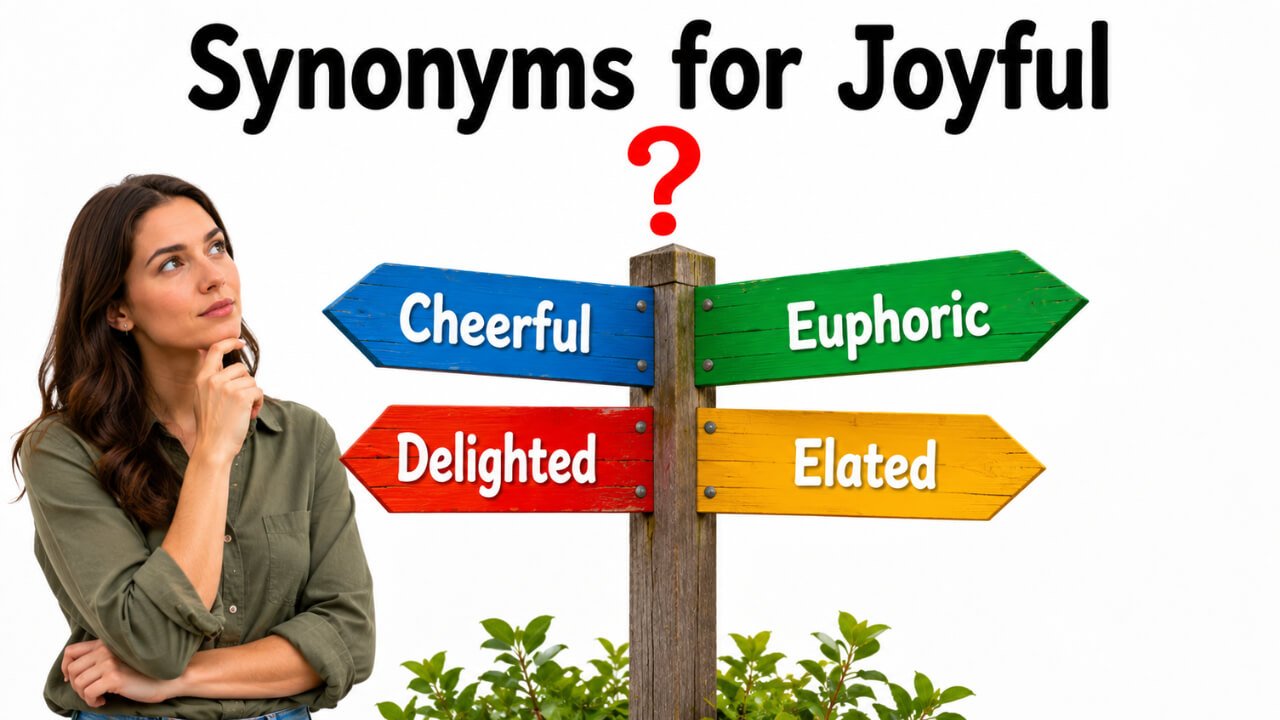
Quick Answer: The best synonyms for joyful include happy, cheerful, delighted, joyous, jubilant, elated, gleeful, blissful, radiant, and exuberant. Use happy as the most general alternative, cheerful for a positive attitude, delighted for pleasure caused by something specific, and jubilant for public celebration. Elated and ecstatic express intense happiness, while blissful suggests peaceful and complete joy. Radiant is ideal for describing a visibly happy face, and exuberant describes energetic excitement.
Pronunciation and Word Details
Word: Joyful
Pronunciation: /ˈdʒɔɪ.fəl/
Part of Speech: Adjective
Meaning: Feeling, showing, or causing great happiness and pleasure.
US Pronunciation:
UK Pronunciation:
What Does “Joyful” Mean?
Joyful means feeling, expressing, or creating great happiness. It is an adjective used to describe people, emotions, occasions, expressions, sounds, and experiences connected with joy.
A person can feel joyful after receiving good news. A celebration can be joyful because it creates happiness among the people attending it. A smile, voice, song, or expression may also be called joyful when it clearly communicates delight.
The word can appear before a noun, as in “a joyful celebration,” or after a linking verb, as in “She felt joyful.” Its exact meaning depends on whether it describes an inner emotion, an outward expression, or an event that produces happiness.
Meaning, Tone, and Context of “Joyful”
Joyful has a warm, positive, and emotionally expressive tone. It is stronger than pleased but usually less extreme than ecstatic. The word is neutral enough for everyday conversation while also being suitable for formal writing, stories, speeches, essays, greetings, and emotional descriptions.
In casual speech, people often replace joyful with happy, glad, cheerful, or thrilled. In literary or descriptive writing, words such as radiant, blissful, exuberant, and jubilant may create a more vivid emotional effect.
Joyful commonly describes celebrations, reunions, announcements, memories, music, expressions, and important life events. It can communicate quiet inner happiness or energetic public excitement, depending on the context.
When and How to Use “Joyful”
For Personal Happiness: Use joyful when someone experiences deep and sincere happiness.
Example: She felt joyful when her family arrived safely.
For Celebrations: Use joyful to describe an occasion filled with happiness, excitement, and positive emotion.
Example: The community gathered for a joyful celebration.
For Good News: Use joyful when an announcement creates strong pleasure or relief.
Example: The couple shared the joyful news with their relatives.
For Facial Expressions: Use joyful when a face, smile, or expression clearly shows happiness.
Example: His joyful smile brightened the entire room.
For Emotional Writing: Use joyful to create a warm and uplifting mood in a story, speech, or personal message.
Example: The children returned home with joyful hearts.
For Sounds and Music: Use joyful when a voice, song, laugh, or sound expresses happiness.
Example: Joyful laughter filled the garden.
Best Synonyms for Joyful
Happy: Feeling pleasure, satisfaction, or general happiness.
Example: She was happy to see her childhood friend again.
Cheerful: Noticeably positive, bright, and pleasant in attitude.
Example: His cheerful greeting made everyone feel welcome.
Delighted: Feeling great pleasure because of a particular event or result.
Example: We were delighted with the thoughtful surprise.
Joyous: Full of joy or connected with a happy occasion.
Example: The ceremony was a joyous event for both families.
Jubilant: Showing great happiness, especially after success or victory.
Example: The jubilant players celebrated their achievement.
Elated: Extremely happy and excited because something good has happened.
Example: She felt elated after receiving the award.
Gleeful: Showing lively and sometimes playful happiness.
Example: The children gave gleeful cheers when the games began.
Blissful: Completely happy, peaceful, and free from worry.
Example: They enjoyed a blissful afternoon beside the lake.
Radiant: Visibly glowing with happiness, health, or confidence.
Example: The graduate looked radiant as she accepted her certificate.
Exuberant: Energetically happy, excited, and enthusiastic.
Example: His exuberant reaction showed how much the news meant to him.
50 Synonyms for Joyful with Short Meanings
- Happy: Feeling pleasure or satisfaction.
- Cheerful: Bright, positive, and pleasant.
- Delighted: Extremely pleased about something.
- Joyous: Filled with or expressing joy.
- Jubilant: Showing great happiness after success.
- Elated: Extremely happy and excited.
- Glad: Pleased or thankful about something.
- Merry: Cheerful, lively, and sociable.
- Gleeful: Showing lively and excited happiness.
- Blissful: Completely happy and peaceful.
- Ecstatic: Experiencing overwhelming happiness.
- Overjoyed: Extremely happy about something.
- Thrilled: Very excited and pleased.
- Exuberant: Energetically happy and enthusiastic.
- Exultant: Triumphantly happy and proud.
- Buoyant: Cheerful, hopeful, and emotionally strong.
- Radiant: Clearly glowing with happiness.
- Beaming: Smiling brightly with pleasure.
- Upbeat: Positive, hopeful, and cheerful.
- Lighthearted: Happy, relaxed, and free from worry.
- Festive: Cheerful and suitable for a celebration.
- Celebratory: Expressing happiness about a special event.
- Euphoric: Feeling unusually intense happiness.
- Rapturous: Showing overwhelming delight or admiration.
- Exhilarated: Feeling excited, refreshed, and happy.
- Triumphant: Joyful because of success or victory.
- Contented: Peacefully happy and satisfied.
- Pleased: Feeling satisfaction or mild happiness.
- Gratified: Pleased because a desire has been fulfilled.
- Satisfied: Happy because expectations have been met.
- Carefree: Free from worry and feeling relaxed.
- Jolly: Happy, friendly, and full of good humor.
- Cheery: Bright, pleasant, and encouraging.
- Lively: Full of positive energy and activity.
- Animated: Visibly excited and full of emotion.
- Vivacious: Attractively energetic, cheerful, and enthusiastic.
- Ebullient: Overflowing with excitement and happiness.
- Effervescent: Lively, enthusiastic, and cheerful.
- Sunny: Bright, optimistic, and pleasant in manner.
- Spirited: Full of energy, confidence, and enthusiasm.
- Rejoicing: Expressing happiness about good news or success.
- Mirthful: Full of laughter and cheerful enjoyment.
- Blithe: Cheerful, relaxed, and unconcerned.
- Blithesome: Lighthearted, merry, and cheerful.
- Jocund: Cheerful and merry in a literary sense.
- Chipper: Cheerful, active, and energetic.
- Chirpy: Noticeably cheerful and lively.
- Gladsome: Causing or expressing happiness.
- Enchanted: Deeply pleased, delighted, or charmed.
- Rapt: Completely absorbed in pleasure or delight.
Read Also:
Synonyms for Greatly

Synonyms for Joyful by Context
When Joyful Means Generally Happy
Happy, glad, cheerful, pleased, and cheery are useful when describing ordinary positive feelings. These alternatives are natural in conversation and do not suggest extreme emotion.
Example: She was happy to spend the evening with her family.
Example: He sounded cheerful during the morning meeting.
When Joyful Means Extremely Happy
Elated, ecstatic, overjoyed, euphoric, thrilled, and rapturous express stronger emotions. Use them when the happiness is intense or connected with important news, achievement, or relief.
Example: She was overjoyed when her missing pet returned home.
Example: The audience was ecstatic about the final performance.
When Joyful Means Celebratory
Jubilant, festive, celebratory, triumphant, rejoicing, and exultant work well for victories, ceremonies, announcements, festivals, and public celebrations.
Example: Jubilant supporters gathered to celebrate the victory.
Example: The event had a festive and welcoming atmosphere.
When Joyful Means Peacefully Happy
Blissful, contented, satisfied, gratified, and carefree describe quieter forms of happiness. These words focus on peace, comfort, or emotional satisfaction rather than excitement.
Example: She felt contented while reading beside the window.
Example: They spent a blissful weekend in the countryside.
When Joyful Describes a Personality or Expression
Radiant, beaming, sunny, buoyant, upbeat, lively, and effervescent describe people who visibly show positive emotion.
Example: Her radiant expression revealed her happiness.
Example: His upbeat attitude encouraged the entire team.
When Joyful Means Energetic Happiness
Exuberant, animated, spirited, vivacious, gleeful, and ebullient describe happiness expressed through movement, speech, laughter, or enthusiastic behavior.
Example: The children gave an exuberant welcome to their teacher.
Example: She became animated while sharing the good news.
Another Word for Joyful
Happy is the best general replacement for joyful because it works naturally in most everyday sentences. However, the strongest alternative depends on the type and intensity of happiness being described.
Use cheerful for a positive mood, delighted for happiness caused by something specific, jubilant for celebration, elated for intense excitement, and blissful for peaceful pleasure.
Original: She gave us a joyful welcome.
Better Option: She gave us a cheerful welcome.
Original: He felt joyful after hearing the result.
Better Option: He felt elated after hearing the result.
Original: It was a joyful day for the community.
Better Option: It was a jubilant day for the community.
Original: They enjoyed a joyful afternoon together.
Better Option: They enjoyed a blissful afternoon together.
When Not to Use “Joyful”
Avoid joyful when a more precise word would explain the intensity, cause, or style of happiness. The word may sound repetitive when it appears several times in the same paragraph.
Joyful may also sound too emotional when you only mean satisfied or pleased. In descriptions of major victories, jubilant or triumphant may be stronger. When describing a person’s everyday attitude, cheerful may sound more natural.
Weak: She was joyful with the quality of the service.
Better: She was satisfied with the quality of the service.
Weak: The joyful team celebrated its championship victory.
Better: The jubilant team celebrated its championship victory.
Weak: He had a joyful and joyful expression throughout the event.
Better: He had a cheerful and radiant expression throughout the event.
Weak: I am joyful that you replied to my message.
Better: I am glad that you replied to my message.
Words Commonly Confused With Joyful
Joyful vs Joyous: Joyful commonly describes a person, feeling, expression, or experience. Joyous often describes an occasion, celebration, or announcement that produces joy.
Joyful vs Happy: Happy is broad and suitable for almost any positive feeling. Joyful is more expressive and usually suggests deeper or more noticeable happiness.
Joyful vs Cheerful: Joyful describes strong happiness, while cheerful often describes a consistently positive mood or friendly manner.
Joyful vs Delighted: Joyful expresses general or deep happiness. Delighted usually refers to pleasure caused by a specific event, offer, result, or experience.
Joyful vs Jubilant: Joyful can describe private or public happiness. Jubilant usually describes open celebration after success, victory, or excellent news.
Joyful vs Elated: Joyful can range from calm to energetic happiness. Elated specifically means intensely happy and excited.
Joyful vs Blissful: Joyful may involve excitement, while blissful emphasizes complete peace, comfort, and happiness.
Joyful vs Pleased: Joyful is emotionally stronger. Pleased usually communicates mild satisfaction or approval.
Which Synonym Should You Choose?
Choose happy for a simple and familiar word that works in most situations.
Choose cheerful when describing a positive personality, friendly mood, bright voice, or pleasant atmosphere.
Choose delighted when someone feels great pleasure because of a specific invitation, gift, result, or experience.
Choose joyous when describing an occasion, ceremony, announcement, reunion, or celebration.
Choose jubilant when people openly celebrate success, victory, or excellent news.
Choose elated when a person feels intensely happy and excited after an achievement.
Choose blissful when the happiness is peaceful, relaxing, and complete.
Choose radiant when someone’s face or appearance visibly communicates happiness.
Choose exuberant when happiness is expressed with energy, enthusiasm, and excitement.
Choose pleased or satisfied in reports, emails, and professional writing when the emotion is positive but controlled.
Choose euphoric or ecstatic when describing an unusually powerful emotional reaction.
Real Life Examples of “Joyful” in Sentences
Original: She felt joyful when she received the acceptance letter.
Better Option: She felt elated when she received the acceptance letter.
Original: The family had a joyful reunion at the airport.
Better Option: The family had a joyous reunion at the airport.
Original: His joyful face showed how much the gift meant to him.
Better Option: His radiant face showed how much the gift meant to him.
Original: The supporters were joyful after the final result.
Better Option: The supporters were jubilant after the final result.
Original: We spent a joyful afternoon beside the river.
Better Option: We spent a blissful afternoon beside the river.
Original: The children were joyful when the school trip was announced.
Better Option: The children were thrilled when the school trip was announced.
Original: She gave a joyful laugh when she saw the surprise.
Better Option: She gave a gleeful laugh when she saw the surprise.
Original: He maintained a joyful attitude during the difficult week.
Better Option: He maintained an upbeat attitude during the difficult week.
Original: The joyful crowd filled the streets after the victory.
Better Option: The exuberant crowd filled the streets after the victory.
Original: They were joyful with the final outcome.
Better Option: They were pleased with the final outcome.
Synonym Groups and Usage Differences
General Happiness Group
Happy, glad, pleased, and cheerful describe common positive feelings. They are familiar, flexible, and suitable for daily conversation.
Example: I am glad that everyone arrived safely.
Intense Happiness Group
Elated, ecstatic, euphoric, overjoyed, and thrilled communicate powerful happiness. They work best when an event produces a strong emotional reaction.
Example: She was overjoyed by the unexpected announcement.
Celebration Group
Jubilant, joyous, festive, celebratory, exultant, and triumphant relate to success, ceremonies, victories, and shared happiness.
Example: The jubilant crowd continued celebrating throughout the evening.
Peaceful Happiness Group
Blissful, contented, satisfied, gratified, and carefree express quiet pleasure or emotional comfort.
Example: He felt contented after completing his work.
Visible Happiness Group
Radiant, beaming, sunny, and cheerful describe happiness that can be seen in someone’s face, smile, voice, or behavior.
Example: Her beaming smile welcomed every guest.
Energetic Happiness Group
Exuberant, ebullient, lively, animated, vivacious, and effervescent describe active and enthusiastic displays of joy.
Example: His exuberant personality brought energy to the gathering.
Playful Happiness Group
Gleeful, merry, jolly, chirpy, and mirthful suggest playful enjoyment, laughter, and social cheerfulness.
Example: The children exchanged gleeful smiles before opening their gifts.
Antonyms of Joyful
The opposite of joyful depends on whether the sentence describes sadness, disappointment, low energy, or emotional suffering.
Sad: Feeling sorrow or unhappiness.
Unhappy: Not feeling pleasure, satisfaction, or joy.
Sorrowful: Deeply affected by sadness or grief.
Miserable: Extremely unhappy or uncomfortable.
Gloomy: Dark, negative, or lacking hope.
Melancholy: Quietly and thoughtfully sad.
Dejected: Discouraged and emotionally low.
Depressed: Experiencing deep sadness or loss of hope.
Dismal: Depressing, unpleasant, or lacking cheer.
Mournful: Expressing grief, sorrow, or sadness.
Joyless: Lacking happiness, pleasure, or delight.
Despondent: Feeling that improvement or success is unlikely.
Disappointed: Unhappy because expectations were not met.
Somber: Serious, quiet, and lacking cheerfulness.
Distressed: Experiencing emotional worry, pain, or suffering.
Comparison: Joyful vs Related Words
Joyful vs Happy
Joyful suggests noticeable or deep happiness. Happy is broader and can describe anything from mild satisfaction to strong pleasure.
Example With Joyful: She felt joyful as she welcomed her family home.
Example With Happy: She was happy with her examination result.
Joyful vs Cheerful
Joyful describes an emotion of happiness. Cheerful often describes a person’s positive attitude, manner, voice, or appearance.
Example With Joyful: He felt joyful after hearing the good news.
Example With Cheerful: He remained cheerful throughout the busy morning.
Joyful vs Joyous
Joyful frequently describes people and emotions. Joyous commonly describes occasions, events, announcements, and celebrations.
Example With Joyful: The children looked joyful during the performance.
Example With Joyous: It was a joyous occasion for the entire community.
Joyful vs Jubilant
Joyful can refer to quiet or energetic happiness. Jubilant describes strong, public, and celebratory happiness.
Example With Joyful: She felt joyful as she read the letter.
Example With Jubilant: The fans were jubilant after their team won.
Joyful vs Elated
Joyful expresses sincere happiness. Elated communicates a much stronger feeling of excitement and emotional uplift.
Example With Joyful: He was joyful about the family gathering.
Example With Elated: He was elated after earning the highest score.
Joyful vs Blissful
Joyful may include excitement and active expression. Blissful describes calm, complete, and peaceful happiness.
Example With Joyful: Joyful voices filled the hall.
Example With Blissful: They enjoyed a blissful morning in the quiet garden.
Joyful vs Delighted
Joyful can describe general happiness. Delighted usually refers to pleasure caused by a particular event, offer, action, or result.
Example With Joyful: She felt joyful throughout the celebration.
Example With Delighted: She was delighted to receive the invitation.
Common Phrases and Expressions With Joyful
Joyful Occasion: A special event filled with happiness.
Joyful Celebration: A gathering that expresses shared happiness.
Joyful News: Information that creates happiness and excitement.
Joyful Smile: A smile that clearly communicates sincere happiness.
Joyful Heart: A person’s inner feeling of happiness and gratitude.
Joyful Moment: A brief experience filled with pleasure or delight.
Joyful Sound: Music, laughter, or another sound that communicates happiness.
Joyful Spirit: A consistently happy, hopeful, and positive attitude.
Joyful Reunion: A happy meeting between people who have been apart.
Joyful Expression: A face or manner that visibly shows happiness.
Common Mistakes to Avoid
One common mistake is treating every synonym for joyful as interchangeable. Happy, jubilant, blissful, and ecstatic all express positive emotion, but they differ in strength and context.
Avoid using extreme words such as ecstatic or euphoric for mild satisfaction. Similarly, pleased may be too weak when describing a life changing achievement or emotional reunion.
Writers should also avoid repeating joyful throughout one paragraph. Replace it with precise alternatives that reflect celebration, peace, excitement, or visible happiness.
Do not confuse joyous with joyful. Both are correct, but joyous is especially natural for occasions and events. Use natural phrasing and consider what caused the emotion before choosing a replacement.
Conclusion
Synonyms for joyful help writers express different levels and types of happiness more precisely. Happy is the most flexible alternative, while cheerful describes a positive manner and delighted expresses pleasure about something specific. Use jubilant for celebration, elated for intense excitement, blissful for peaceful happiness, and radiant for visible joy. Exuberant is ideal for energetic emotion, while pleased suits controlled or professional contexts. Choosing a synonym based on tone, intensity, and situation makes every sentence clearer and more expressive.
FAQs About Synonyms for Joyful
What Is the Best Synonym for Joyful?
Happy is the best general synonym for joyful. Cheerful, delighted, joyous, jubilant, and elated are better in more specific contexts.
What Is a Stronger Word Than Joyful?
Ecstatic, euphoric, overjoyed, and rapturous are stronger than joyful because they communicate overwhelming happiness.
Is Joyous the Same as Joyful?
The words are very similar. Joyful often describes people and feelings, while joyous commonly describes celebrations, occasions, and announcements.
What Is a Formal Synonym for Joyful?
Elated, jubilant, gratified, exultant, and delighted can work well in formal or polished writing, depending on the context.
What Is a Casual Synonym for Joyful?
Happy, glad, thrilled, cheerful, jolly, and upbeat are natural alternatives in casual speech and everyday writing.
Which Synonym Describes Peaceful Joy?
Blissful and contented describe calm, peaceful happiness. Satisfied and gratified are useful when the happiness comes from a positive result.
Which Synonym Describes Visible Happiness?
Radiant and beaming describe happiness that is clearly visible in someone’s face, smile, or overall appearance.
