
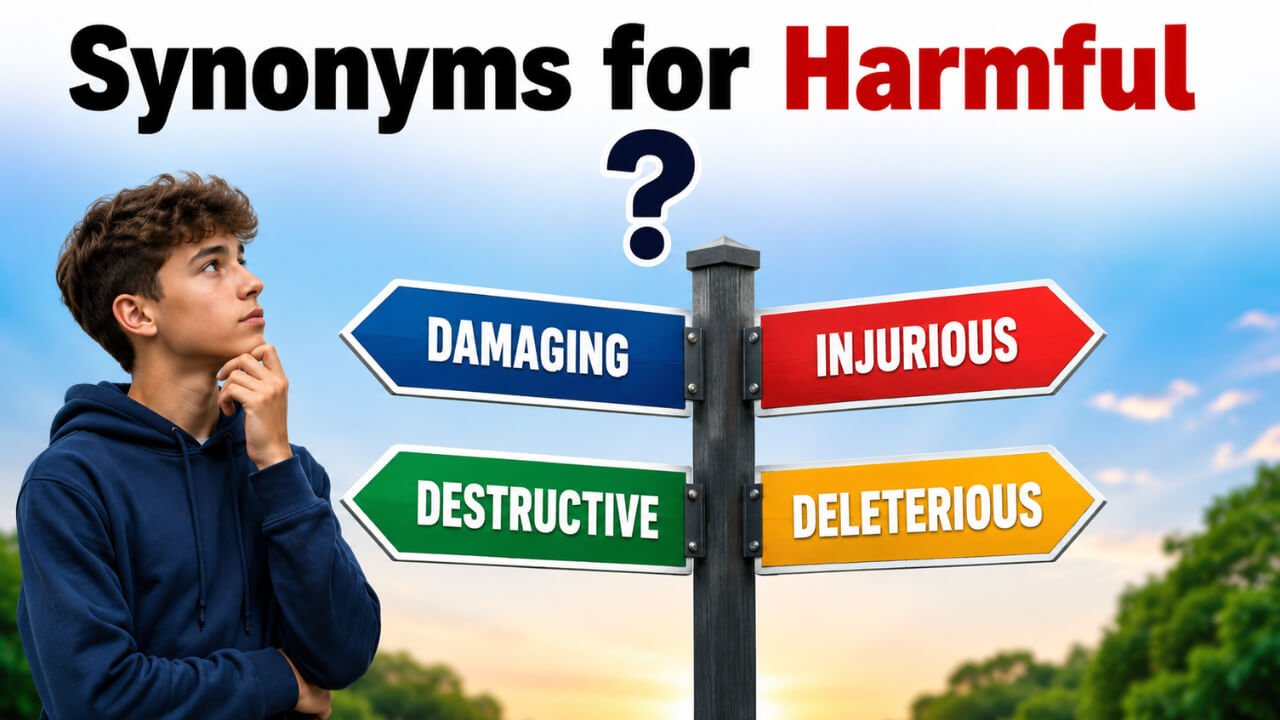
Quick Answer: The best synonyms for harmful include damaging, dangerous, detrimental, injurious, destructive, adverse, toxic, hazardous, pernicious, and hurtful. Use damaging for general negative effects, dangerous for something likely to cause injury, detrimental in formal or academic writing, toxic for poisonous substances or unhealthy relationships, adverse for unfavorable results, and hurtful for words or actions that cause emotional pain. The best choice among synonyms for harmful depends on whether the subject involves physical injury, health risks, emotional distress, environmental damage, or negative consequences.
Pronunciation and Word Details
Word: Harmful
Pronunciation: /ˈhɑːrm.fəl/
Part of Speech: Adjective
Meaning: Harmful describes something that causes or is likely to cause physical, emotional, environmental, financial, or social damage.
US Pronunciation:
UK Pronunciation:
What Does “Harmful” Mean?
Harmful means causing damage, injury, pain, illness, loss, or another negative effect.
It is an adjective used before a noun or after a linking verb. Harmful can describe substances, actions, habits, words, relationships, policies, environmental conditions, and long term effects.
Before a Noun: Harmful chemicals entered the water.
After a Linking Verb: Too much noise can be harmful.
The word can refer to direct physical danger, such as a poisonous substance, or indirect damage that develops over time, such as an unhealthy habit.
Physical Harm: The fumes may be harmful to the lungs.
Emotional Harm: Cruel comments can be harmful to a child’s confidence.
Environmental Harm: Plastic waste is harmful to marine life.
Financial Harm: Poor planning may have harmful consequences for the business.
Because harmful covers many kinds of damage, a more specific synonym can often make a sentence clearer.
Meaning, Tone, and Context of “Harmful”
Harmful has a neutral but cautionary tone. It signals that something may cause injury, damage, loss, or an undesirable result.
The word is common in everyday conversation, health information, academic writing, environmental discussions, safety instructions, reports, essays, and professional communication.
Formal Context: The policy may have harmful effects on vulnerable communities.
Academic Context: Researchers examined the harmful influence of prolonged stress.
Health Context: Breathing polluted air can be harmful to health.
Environmental Context: Chemical waste is harmful to rivers and wildlife.
Conversational Context: Staying awake all night can be harmful.
Harmful is less intense than deadly or devastating. It is broader than toxic, which often refers to poison or severely unhealthy behavior. It is also more direct than adverse, which usually describes an unfavorable effect, reaction, or condition.
When and How to Use “Harmful”
For Physical Injury
Use harmful when something can injure the body or damage a physical object.
Example: Looking directly at intense light can be harmful to the eyes.
Dangerous, injurious, hazardous, and unsafe may provide greater precision.
For Health Risks
Use harmful for substances, habits, foods, chemicals, or conditions that negatively affect health.
Example: Excessive sugar consumption may be harmful to dental health.
Toxic, unhealthy, poisonous, carcinogenic, and noxious are useful alternatives in specific health contexts.
For Emotional Damage
Use harmful when words, behavior, or relationships negatively affect someone’s emotions, confidence, or mental wellbeing.
Example: Constant criticism can be harmful to a person’s confidence.
Hurtful, abusive, cruel, wounding, and toxic may communicate the emotional effect more clearly.
For Environmental Damage
Use harmful for activities or substances that damage air, water, soil, plants, or animals.
Example: Oil spills are harmful to coastal ecosystems.
Polluting, contaminating, destructive, and toxic are useful environmental alternatives.
For Negative Results
Use harmful when an action, decision, or policy creates an unwanted outcome.
Example: Delaying the repairs could be harmful to the entire project.
Detrimental, adverse, disadvantageous, counterproductive, and prejudicial fit formal discussions of consequences.
For Gradual Damage
Use harmful when the negative effect develops slowly rather than immediately.
Example: Repeated exposure to loud noise may be harmful over time.
Pernicious, erosive, undermining, and debilitating can describe damage that develops gradually.
Best Synonyms for Harmful
Damaging
Synonym: Causing physical, emotional, financial, or reputational harm.
Example: The false accusation was damaging to her reputation.
Damaging is the closest general replacement for harmful in many sentences.
Dangerous
Synonym: Likely to cause injury, loss, or serious harm.
Example: Driving in thick fog can be dangerous.
Dangerous emphasizes the possibility of harm rather than damage that has already occurred.
Detrimental
Synonym: Causing a negative effect or reducing quality, success, or wellbeing.
Example: Poor communication can be detrimental to teamwork.
Detrimental is a strong choice for formal, academic, and professional writing.
Injurious
Synonym: Causing injury or damage to health, rights, or interests.
Example: The substance may be injurious to human health.
Injurious is formal and often appears in health, legal, or scientific contexts.
Destructive
Synonym: Causing severe damage or complete ruin.
Example: The storm had a destructive effect on the coastal town.
Destructive is stronger than harmful and suggests extensive damage.
Adverse
Synonym: Unfavorable or likely to prevent success or wellbeing.
Example: The medicine caused an adverse reaction.
Adverse is commonly used with effects, reactions, conditions, and consequences.
Toxic
Synonym: Poisonous or seriously damaging to health, relationships, or wellbeing.
Example: Toxic fumes filled the enclosed space.
Toxic can describe chemicals, substances, environments, relationships, and behavior.
Hazardous
Synonym: Involving a serious risk of injury, damage, or danger.
Example: Workers must wear protective clothing around hazardous materials.
Hazardous is especially useful in safety, workplace, environmental, and technical writing.
Pernicious
Synonym: Causing serious damage gradually and often without being noticed.
Example: Misinformation can have a pernicious influence on public understanding.
Pernicious is a formal word for subtle but severe harm.
Hurtful
Synonym: Causing emotional pain, sadness, or offense.
Example: His hurtful remarks damaged their friendship.
Hurtful is the best alternative when harmful refers to words, actions, or behavior that cause emotional distress.
50 Synonyms for Harmful with Short Meanings
- Damaging: Causing physical, emotional, financial, or reputational harm.
- Dangerous: Likely to cause injury, loss, or serious trouble.
- Detrimental: Producing a negative effect on success or wellbeing.
- Injurious: Causing injury or damage to health or interests.
- Destructive: Causing severe damage or complete ruin.
- Deleterious: Having a damaging effect, especially over time.
- Adverse: Unfavorable or harmful to progress or wellbeing.
- Noxious: Harmful, poisonous, or unpleasant to living things.
- Toxic: Poisonous or severely damaging to health or relationships.
- Hazardous: Involving a serious possibility of harm or injury.
- Pernicious: Causing serious damage gradually or secretly.
- Unhealthy: Likely to damage physical or emotional wellbeing.
- Unsafe: Not protected from danger, injury, or loss.
- Poisonous: Containing a substance capable of causing illness or death.
- Deadly: Capable of causing death or extreme destruction.
- Fatal: Causing death or complete failure.
- Corrosive: Gradually destroying a material, relationship, or value.
- Contaminating: Making something impure, unsafe, or polluted.
- Polluting: Damaging the environment by introducing harmful material.
- Ruinous: Causing severe loss, destruction, or financial damage.
- Devastating: Causing overwhelming damage, pain, or destruction.
- Disastrous: Producing extremely bad or damaging results.
- Impairing: Reducing quality, strength, ability, or effectiveness.
- Debilitating: Making a person or system seriously weak.
- Hurtful: Causing emotional pain or sadness.
- Painful: Causing physical or emotional suffering.
- Wounding: Causing injury or deep emotional pain.
- Abusive: Involving cruel, violent, or damaging treatment.
- Offensive: Causing anger, discomfort, or emotional harm.
- Malicious: Intentionally intended to cause damage or suffering.
- Cruel: Willingly causing pain, distress, or suffering.
- Hostile: Showing aggression or creating an unsafe environment.
- Prejudicial: Damaging to someone’s rights, interests, or fair treatment.
- Unfavorable: Producing a negative or unwanted result.
- Negative: Having an undesirable effect or influence.
- Counterproductive: Creating the opposite of the intended result.
- Disadvantageous: Placing someone in a worse or weaker position.
- Threatening: Suggesting that danger or damage may occur.
- Menacing: Appearing likely to cause harm or fear.
- Perilous: Full of serious danger or risk.
- Risky: Involving the possibility of damage, injury, or loss.
- Treacherous: Dangerous because the risk is hidden or unpredictable.
- Virulent: Extremely harmful, infectious, or hostile.
- Pathogenic: Capable of causing disease.
- Carcinogenic: Capable of causing cancer.
- Irritating: Causing inflammation, discomfort, or annoyance.
- Disruptive: Interrupting normal activity, progress, or stability.
- Erosive: Gradually weakening or destroying something.
- Undermining: Gradually reducing strength, confidence, or effectiveness.
- Sabotaging: Deliberately damaging or preventing success.
Read Also:
Synonyms for Puny
Synonyms for Harmful by Context
When Harmful Means Physically Dangerous
Use dangerous, unsafe, hazardous, perilous, threatening, menacing, or treacherous when something presents a risk of physical injury.
Example: The damaged bridge is unsafe for heavy vehicles.
Example: Workers entered a hazardous area.
Dangerous is broad and common. Hazardous is more formal and often relates to workplaces, chemicals, equipment, or environmental conditions. Perilous suggests a very high level of danger.
When Harmful Means Bad for Health
Use unhealthy, toxic, poisonous, noxious, injurious, pathogenic, carcinogenic, or debilitating.
Example: The building contained toxic fumes.
Example: The laboratory studies pathogenic bacteria.
Unhealthy works for habits, diets, environments, and relationships. Poisonous describes something that can cause illness when absorbed, inhaled, or consumed. Pathogenic and carcinogenic have narrow scientific meanings.
When Harmful Means Environmentally Damaging
Use polluting, contaminating, toxic, destructive, corrosive, or noxious.
Example: The factory released polluting chemicals into the river.
Example: Contaminating waste entered the soil.
Polluting focuses on damage to air, land, or water. Contaminating means making something impure or unsafe. Destructive emphasizes extensive environmental damage.
When Harmful Means Emotionally Painful
Use hurtful, painful, wounding, abusive, cruel, offensive, malicious, or toxic.
Example: Her hurtful words affected his confidence.
Example: The employee reported abusive behavior.
Hurtful is suitable for words and actions that cause sadness. Abusive describes repeated or severe mistreatment. Malicious shows an intention to cause harm.
When Harmful Means Bad for Progress
Use detrimental, adverse, counterproductive, disadvantageous, impairing, disruptive, undermining, or prejudicial.
Example: Constant delays were detrimental to the project.
Example: The new restriction proved counterproductive.
Detrimental is useful for formal analysis. Counterproductive means an action creates the opposite result from the one intended. Disruptive focuses on interrupted activity or stability.
When Harmful Means Severely Destructive
Use destructive, devastating, disastrous, ruinous, deadly, or fatal.
Example: The flood had a devastating effect on local farms.
Example: A fatal error caused the system to stop working.
Devastating describes overwhelming damage or distress. Ruinous often relates to financial or structural destruction. Fatal can refer to death or an error that causes complete failure.
When Harmful Means Gradually Damaging
Use pernicious, deleterious, corrosive, erosive, debilitating, or undermining.
Example: The rumor had a pernicious influence on the community.
Example: Repeated criticism can have an erosive effect on confidence.
Pernicious suggests severe damage that develops subtly. Corrosive and erosive describe gradual weakening. Debilitating focuses on loss of strength or ability.
Another Word for Harmful
Damaging is the best general replacement for harmful because it applies to physical, emotional, environmental, financial, and social harm. However, the most accurate alternative depends on the type and seriousness of the damage.
Original: The decision could be harmful to the organization.
Better Option: The decision could be damaging to the organization.
Original: These fumes are harmful to human health.
Better Option: These fumes are toxic to human health.
Original: His comments were harmful to her confidence.
Better Option: His comments were hurtful and undermined her confidence.
Original: The policy had a harmful effect on small businesses.
Better Option: The policy had a detrimental effect on small businesses.
When Not to Use “Harmful”
Harmful may be too broad when the reader needs to know the exact type, source, or severity of the danger.
When the Risk Is Immediate
Use dangerous, deadly, unsafe, or hazardous when immediate physical injury is possible.
Weak: Entering the burning building is harmful.
Better: Entering the burning building is extremely dangerous.
Dangerous communicates an urgent risk more clearly.
When the Effect Is Emotional
Use hurtful, cruel, abusive, or wounding when describing emotional pain.
Weak: His harmful words upset the child.
Better: His hurtful words upset the child.
Hurtful identifies the emotional effect directly.
When Writing About Formal Results
Use detrimental or adverse when discussing research findings, policies, treatments, or economic effects.
Weak: The treatment produced harmful effects.
Better: The treatment produced adverse effects.
Adverse is a common and precise choice for unwanted medical or formal outcomes.
When Describing Poison
Use toxic, poisonous, noxious, or carcinogenic when the exact health risk is known.
Weak: The gas is harmful.
Better: The gas is toxic when inhaled.
The revised sentence communicates the danger more precisely.
When the Damage Is Extreme
Harmful may sound too mild for severe destruction.
Weak: The earthquake was harmful to the region.
Better: The earthquake was devastating to the region.
Devastating reflects the seriousness of the destruction.
When Harmful Is Repeated
Repeating harmful can make an explanation sound vague.
Weak: Harmful chemicals have harmful effects on animals and create harmful environmental conditions.
Better: Toxic chemicals injure animals and create destructive environmental conditions.
Words Commonly Confused With Harmful
Harmful vs Dangerous: Harmful describes something that causes damage. Dangerous describes something that creates a risk of damage or injury.
Harmful vs Toxic: Harmful is broad, while toxic describes something poisonous or severely damaging to physical or emotional wellbeing.
Harmful vs Detrimental: Harmful is common in general writing. Detrimental is more formal and often describes negative effects on progress, health, success, or quality.
Harmful vs Adverse: Harmful directly describes something that causes damage. Adverse usually describes an unfavorable effect, reaction, condition, or outcome.
Harmful vs Hazardous: Harmful describes a damaging quality. Hazardous emphasizes the presence of a serious risk.
Harmful vs Injurious: Harmful is common and flexible. Injurious is more formal and emphasizes actual injury or damage to health, rights, or interests.
Harmful vs Hurtful: Harmful covers every type of damage. Hurtful mainly describes words, actions, or behavior that cause emotional pain.
Harmful vs Destructive: Harmful may describe mild or severe damage. Destructive normally suggests extensive damage or ruin.
Harmful vs Unhealthy: Harmful can describe any damaging effect. Unhealthy mainly relates to physical health, emotional wellbeing, habits, or relationships.
Harmful vs Noxious: Harmful is broad. Noxious often describes poisonous, unpleasant, or dangerous gases, substances, plants, and influences.
Which Synonym Should You Choose?
Choose damaging for a clear and general alternative that works in most contexts.
Choose dangerous when something may cause immediate physical injury or serious loss.
Choose detrimental for formal writing about negative effects on health, progress, performance, or success.
Choose adverse for unfavorable reactions, effects, conditions, or outcomes.
Choose injurious for formal discussions of damage to health, legal rights, or personal interests.
Choose toxic for poison, dangerous chemicals, severely unhealthy environments, or damaging relationships.
Choose hazardous for workplace risks, dangerous materials, unsafe equipment, and environmental threats.
Choose hurtful for words, actions, or behavior that cause emotional pain.
Choose abusive for repeated, severe, or controlling mistreatment.
Choose destructive when something causes extensive physical, social, or environmental damage.
Choose devastating when the damage or emotional impact is overwhelming.
Choose pernicious when serious damage develops slowly or remains difficult to notice.
Choose counterproductive when an action creates the opposite result from what was intended.
Choose carcinogenic only when something is scientifically associated with causing cancer.
Choose pathogenic only when describing an organism or substance capable of causing disease.
Real Life Examples of “Harmful” in Sentences
Example One
Original: Excessive noise can be harmful to hearing.
Better Option: Excessive noise can be damaging to hearing.
Example Two
Original: The chemical is harmful when inhaled.
Better Option: The chemical is toxic when inhaled.
Example Three
Original: The broken equipment may be harmful to workers.
Better Option: The broken equipment may be hazardous to workers.
Example Four
Original: Her harmful remarks affected his confidence.
Better Option: Her hurtful remarks affected his confidence.
Example Five
Original: The decision had a harmful effect on productivity.
Better Option: The decision had a detrimental effect on productivity.
Example Six
Original: The medicine caused a harmful reaction.
Better Option: The medicine caused an adverse reaction.
Example Seven
Original: The storm was harmful to several coastal communities.
Better Option: The storm was devastating to several coastal communities.
Example Eight
Original: Harmful waste entered the river.
Better Option: Toxic waste entered the river.
Example Nine
Original: Constant interruptions are harmful to concentration.
Better Option: Constant interruptions are disruptive to concentration.
Example Ten
Original: The false information had a harmful influence.
Better Option: The false information had a pernicious influence.
Synonym Groups and Usage Differences
General Damage Group
Damaging, harmful, detrimental, deleterious, and adverse describe negative effects across many contexts.
Example: Poor maintenance can have a detrimental effect on safety.
Damaging is common and direct. Detrimental and deleterious are more formal. Adverse is frequently paired with effect, reaction, condition, and consequence.
Danger Group
Dangerous, hazardous, unsafe, perilous, risky, threatening, menacing, and treacherous describe the possibility of injury or loss.
Example: The icy road created hazardous driving conditions.
Hazardous is formal and safety focused. Perilous suggests extreme danger. Treacherous often describes hidden or unpredictable danger.
Health Group
Toxic, poisonous, noxious, unhealthy, pathogenic, carcinogenic, injurious, and debilitating relate to physical health.
Example: Long exposure to the noxious fumes caused breathing problems.
Toxic and poisonous relate to substances. Pathogenic relates to disease. Carcinogenic specifically relates to cancer.
Emotional Harm Group
Hurtful, painful, wounding, abusive, cruel, malicious, offensive, and hostile describe emotional or interpersonal harm.
Example: The hostile environment made cooperation difficult.
Hurtful focuses on emotional pain. Malicious suggests deliberate harm. Abusive describes serious mistreatment.
Severe Damage Group
Destructive, devastating, disastrous, ruinous, deadly, and fatal describe extreme consequences.
Example: The fire caused devastating damage to the building.
Destructive focuses on ruin. Devastating adds overwhelming physical or emotional impact. Fatal describes death or complete failure.
Gradual Damage Group
Pernicious, corrosive, erosive, undermining, impairing, and debilitating describe damage that develops over time.
Example: Distrust had a corrosive effect on the partnership.
Corrosive and erosive suggest gradual weakening. Undermining describes a reduction in strength, authority, or confidence.
Progress and Performance Group
Counterproductive, disadvantageous, disruptive, unfavorable, negative, and prejudicial describe damage to progress, fairness, or success.
Example: Excessive rules may become counterproductive.
Counterproductive means producing the opposite result. Disadvantageous means creating a weaker position. Prejudicial often relates to rights, interests, or fair judgment.
Antonyms of Harmful
The opposite of harmful changes according to the context.
Harmless: Unable or unlikely to cause damage.
Safe: Protected from danger, injury, or loss.
Beneficial: Producing a useful or positive result.
Helpful: Providing support or improving a situation.
Healthy: Supporting physical or emotional wellbeing.
Protective: Preventing injury, damage, or danger.
Constructive: Producing useful progress or improvement.
Favorable: Supporting a positive result or condition.
Positive: Having a desirable effect or influence.
Healing: Helping an injury, illness, or emotional wound improve.
Restorative: Returning health, strength, or quality.
Nourishing: Supporting growth, health, or development.
Supportive: Providing help, encouragement, or strength.
Advantageous: Creating a useful or favorable position.
Nonpoisonous: Not containing substances that cause poisoning.
Comparison: Harmful vs Related Words
Harmful vs Dangerous
Harmful means causing damage. Dangerous means creating a serious risk that damage may occur.
Example With Harmful: Excessive sunlight can be harmful to the skin.
Example With Dangerous: Walking near the unstable cliff is dangerous.
Harmful vs Damaging
Harmful and damaging are close synonyms. Damaging often emphasizes the effect on a specific person, object, reputation, or system.
Example With Harmful: The habit is harmful to health.
Example With Damaging: The accusation was damaging to her reputation.
Harmful vs Detrimental
Harmful is common in everyday language. Detrimental is more formal and often appears in reports, essays, and professional analysis.
Example With Harmful: Poor sleep is harmful to concentration.
Example With Detrimental: Poor sleep is detrimental to academic performance.
Harmful vs Toxic
Harmful covers many forms of damage. Toxic usually refers to poison or an environment, behavior, or relationship that causes severe harm.
Example With Harmful: The habit may be harmful over time.
Example With Toxic: The workers were exposed to toxic chemicals.
Harmful vs Adverse
Harmful directly describes something that causes damage. Adverse describes an unfavorable effect, reaction, or condition.
Example With Harmful: The substance may be harmful to children.
Example With Adverse: The patient experienced an adverse reaction.
Harmful vs Hazardous
Harmful describes the damaging nature of something. Hazardous emphasizes the risk involved in being near, using, or handling it.
Example With Harmful: The waste is harmful to wildlife.
Example With Hazardous: Handling the waste without protection is hazardous.
Harmful vs Hurtful
Harmful can describe physical, emotional, financial, or environmental damage. Hurtful normally refers to emotional pain.
Example With Harmful: The policy was harmful to small businesses.
Example With Hurtful: Her comment was deeply hurtful.
Harmful vs Destructive
Harmful may describe any degree of damage. Destructive suggests severe damage or ruin.
Example With Harmful: The habit has harmful consequences.
Example With Destructive: The wildfire was destructive to the entire region.
Common Phrases and Expressions With Harmful
Harmful Effects: Negative results caused by an action, substance, or condition.
Example: Researchers studied the harmful effects of air pollution.
Harmful to Health: Capable of damaging physical or emotional wellbeing.
Example: Prolonged stress may be harmful to health.
Harmful Chemicals: Substances that can injure people, animals, or the environment.
Example: Protective equipment reduces contact with harmful chemicals.
Harmful Behavior: Actions that negatively affect oneself or other people.
Example: The program helps students recognize harmful behavior.
Harmful Influence: A person, idea, or condition that encourages negative outcomes.
Example: Constant negativity can become a harmful influence.
Harmful Consequences: Damaging results that follow an action or decision.
Example: Ignoring safety rules can have harmful consequences.
Potentially Harmful: Capable of causing damage under certain conditions.
Example: The material may be potentially harmful when heated.
Environmentally Harmful: Causing damage to air, land, water, plants, or animals.
Example: The company replaced environmentally harmful materials.
Physically Harmful: Capable of causing injury or damage to the body.
Example: The activity may be physically harmful without proper training.
Emotionally Harmful: Causing distress, fear, reduced confidence, or emotional pain.
Example: Constant humiliation can be emotionally harmful.
Common Mistakes to Avoid
Using Harmful and Dangerous as Exact Synonyms
Harmful describes damage, while dangerous emphasizes the possibility of damage.
Incorrect Choice: The medicine is dangerous because it caused a mild side effect.
Better Choice: The medicine caused a harmful side effect.
Dangerous may exaggerate the level of risk unless serious injury is possible.
Using Toxic for Every Negative Situation
Toxic is stronger than harmful and should not replace it when the effect is mild.
Weak: One small disagreement created a toxic conversation.
Better: One small disagreement created an unhelpful conversation.
Use toxic for severe, poisonous, or consistently damaging conditions.
Confusing Adverse With Averse
Adverse means unfavorable or harmful. Averse means strongly opposed to something.
Adverse Example: The treatment produced an adverse reaction.
Averse Example: She is averse to unnecessary risk.
Repeating Harmful Too Often
Replace repeated uses with context specific alternatives.
Weak: Harmful habits can have harmful effects and create harmful conditions.
Better: Unhealthy habits can have damaging effects and create dangerous conditions.
Choosing an Overly Strong Synonym
Deadly, fatal, and devastating should only be used when the consequences are truly extreme.
Exaggerated: Missing one meeting was devastating to the project.
Better: Missing one meeting was disruptive to the project.
Using Scientific Words Without the Correct Meaning
Pathogenic means capable of causing disease. Carcinogenic means capable of causing cancer.
Do not use these words as general replacements for harmful unless the specific scientific meaning applies.
Ignoring the Type of Harm
A good synonym should identify whether the harm is physical, emotional, environmental, financial, or social.
Vague: The decision was harmful.
Clearer: The decision was financially damaging.
Using Harmful Without Explaining the Risk
In safety and health writing, explain how something causes harm when the information is known.
Vague: The substance is harmful.
Clearer: The substance is toxic when inhaled and may irritate the lungs.
Conclusion
The best synonyms for harmful depend on the type and seriousness of the damage. Use damaging for a general alternative, dangerous or hazardous for physical risks, detrimental or adverse in formal writing, and toxic or poisonous for health threats. Hurtful and abusive describe emotional harm, while destructive, devastating, and ruinous express severe damage. Choosing precise synonyms for harmful makes warnings, reports, essays, and everyday sentences clearer by showing exactly how an action, substance, behavior, or condition creates negative effects.
FAQs About Synonyms for Harmful
What Is the Best Synonym for Harmful?
Damaging is the best general synonym for harmful. Detrimental is better for formal writing, while dangerous is suitable when there is a risk of injury.
What Is a Formal Synonym for Harmful?
Detrimental, deleterious, injurious, adverse, and pernicious are formal alternatives. The best choice depends on the type of damage being described.
What Is a Stronger Word for Harmful?
Destructive, devastating, deadly, ruinous, and pernicious are stronger words. They should be used only when the damage is serious.
Is Toxic a Synonym for Harmful?
Toxic can be a synonym when something is poisonous or severely damaging. It is especially suitable for chemicals, environments, behavior, and relationships.
What Is Another Word for Harmful Effects?
Adverse effects, damaging consequences, detrimental results, negative outcomes, and injurious effects are natural alternatives.
What Is the Opposite of Harmful?
Harmless, safe, beneficial, healthy, helpful, constructive, and protective are common opposites of harmful.
What Is the Difference Between Harmful and Dangerous?
Harmful describes something that causes damage. Dangerous describes something that creates a risk of injury, damage, or loss.
